
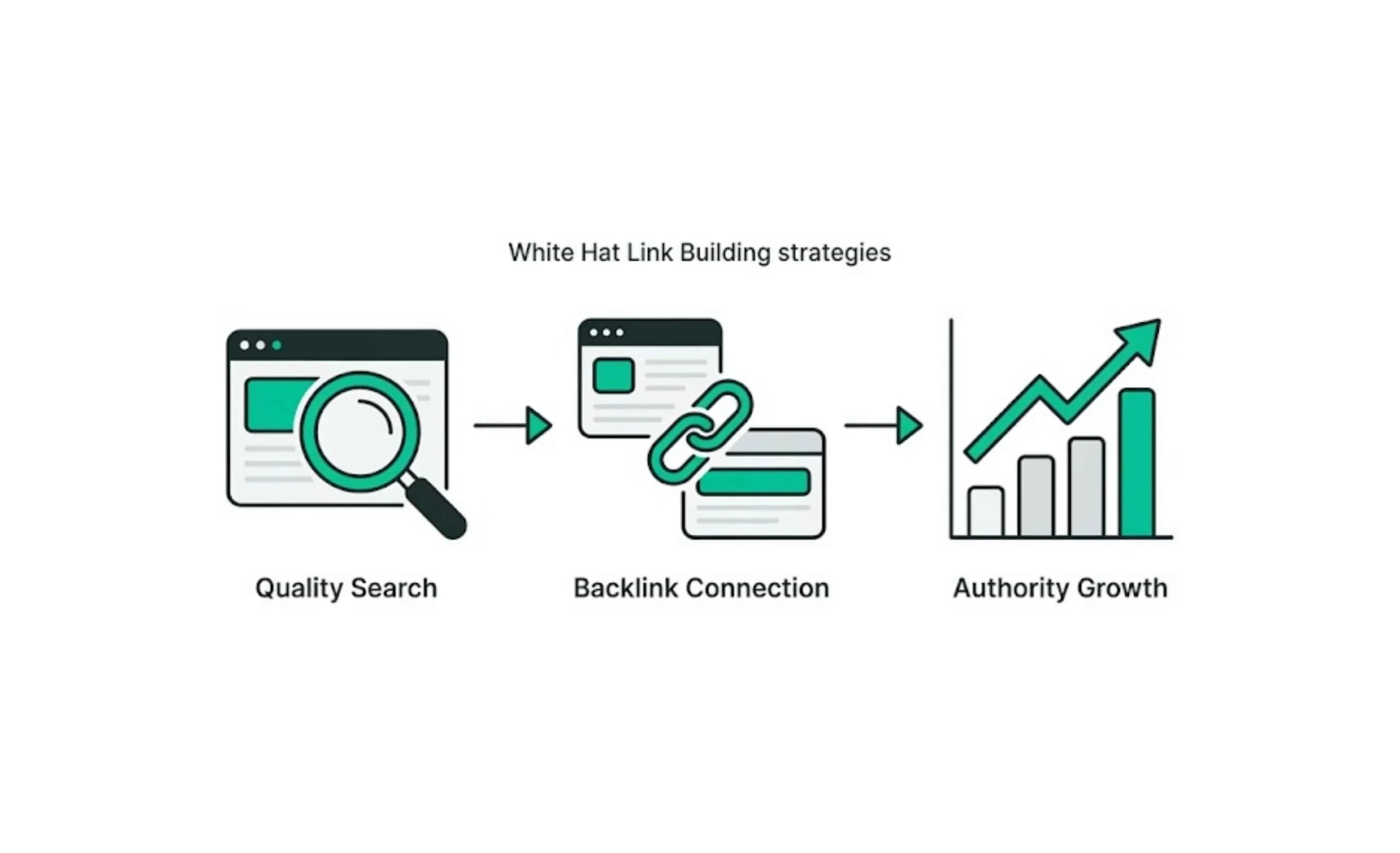
Want higher Google rankings without putting your website at risk? White hat link building is one of the safest ways to earn authority, improve organic visibility, and build a backlink profile that can support long-term SEO growth. Instead of relying on shortcuts, it focuses on earning links because your content is genuinely useful, relevant, and worth referencing.
The problem is that not every backlink is valuable. A single white hat backlink from a trusted, relevant website can be more useful than dozens of random links from low-quality domains. That’s why understanding proven whitehat link building techniques matters if you want sustainable results rather than a temporary rankings boost.
What Is White Hat Link Building?
White hat link building is the practice of acquiring inbound hyperlinks (backlinks) from authoritative, topically relevant external websites through organic, editorial, and guideline-compliant methods. Unlike deceptive or manipulative tactics designed to trick search algorithms, ethical link building focuses on creating genuine value, fostering industry relationships, developing linkable assets, and earning mentions organically.
       ┌─────────────────────────────────────────────────────────┐
       │             Core Tenets of White Hat Link Building       │
       └────────────────────────────┬────────────────────────────┘
                                    │
     ┌──────────────────────────────┼──────────────────────────────┐
     │                              │                              │
┌────▼─────────────────┐  ┌─────────▼────────────┐  ┌──────────────▼──────────┐
│ Top-Tier Value       │  │ Editorial Integrity  │  │ Strict Compliance       │
│ Original data, deep  │  │ Voluntary, earned    │  │ Aligns with Google's    │
│ insight, utility     │  │ contextual links     │  │ Search Essentials       │
└──────────────────────┘  └──────────────────────┘  └─────────────────────────┘
The Philosophical Foundations of Ethical SEO
At its core, ethical link building aligns with Google’s fundamental mission: delivering the most relevant, reliable, and authoritative answers to user queries. Search engines evaluate the link graph not merely by the raw count of inbound links, but by the contextual integrity, editorial intent, and authority score of the linking domains.
When you practice safe link building, your primary motivation is to enhance the open web by providing resources that third-party content creators, White Hat Link Building journalists, editors, and industry leaders voluntarily cite. You are not buying PageRank or manufacturing artificial link footprints; you are building an authoritative digital footprint.
How White Hat Differs from Grey Hat and Black Hat
To understand ethical link building, one must clearly delineate the boundaries across the three primary classifications of SEO link acquisition:
- White Hat SEO Link Building: Strictly adheres to Google Search Essentials and link spam policies. Links are obtained through editorial merit, content promotion, digital PR, authentic networking, and value-add outreach. The risk profile is zero when executed correctly, and the resulting authority builds permanent search equity.
- Black Hat Link Building: Directly violates search engine guidelines through deliberate manipulation. Practices include buying do-follow backlinks without
rel="sponsored"orrel="nofollow"attributes, building private blog networks (PBNs), deploying automated comment spam, hacking websites for hidden White Hat Link Building link injections, and spinning content on automated link networks. These methods carry an extreme risk of algorithmic devaluation or permanent manual removal from the index. - Grey Hat Link Building: Operates in ambiguous terrain. It often involves tactics that simulate natural backlink growth but violate the spirit of Google’s guidelines, such as scaled non-editorial guest posting on low-tier contributor sites, undisclosed paid reviews, or expired domain redirection for immediate link equity transfer. While sometimes effective in the short term, grey hat techniques eventually degrade as detection algorithms evolve.
Search Engine Guidelines and Policy Compliance
Google’s Spam Policies explicitly state that any links intended to manipulate PageRank or a site’s ranking in Google Search results may be considered link spam. This includes:
- Buying or selling links for ranking purposes (exchanging money, goods, services, or free products for do-follow links).
- Excessive link exchanges (“Link to me and I’ll link to you”) or partner pages exclusively created for cross-linking.
- Using automated programs or services to create links to your site.
- Requiring links as part of Terms of Service, contracts, or licensing agreements without allowing a
nofolloworsponsoredattribute. - Distributing low-quality, keyword-rich anchor text links embedded in widgets, forum signatures, or mass guest posts.
White hat link building ensures that every link acquired sits within an editorial context, reflects natural human curation, uses organic anchor text distributions, and adheres to attribute requirements when commercial relationships exist.
How White Hat Link Building Helps Improve Google Rankings
Search engines analyze billions of pages across the global link graph to establish relevance, topical expertise, and authority. The mechanics of safe link building influence organic performance across several key algorithmic layers:
┌──────────────────────────────────────────────────────────────────────────┐
│                    The Algorithmic Transmission Path                     │
├──────────────────────────────────────────────────────────────────────────┤
│                                                                          │
│  [High-Authority Referring Domain]                                       │
│          │                                                               │
│          │ (Editorial Link Equity / Crawl Priority)                      │
│          ▼                                                               │
│  [Target Domain Linkable Asset]                                          │
│          │                                                               │
│          │ (Internal Linking Architecture)                               │
│          ▼                                                               │
│  [Commercial & Core Informational Landing Pages]                         │
│          │                                                               │
│          │ (Topical Authority Clustering & Trust Flow)                   │
│          ▼                                                               │
│  [Enhanced SERP Visibility, Keyword Impressions & Organic Conversions]   │
│                                                                          │
└──────────────────────────────────────────────────────────────────────────┘
1. Link Equity and the Modern PageRank Algorithm
While Google no longer publishes a public PageRank toolbar score, PageRank remains an active, foundational component of the core ranking infrastructure. When an authoritative domain with high trust links to your page, it passes link equity (historically termed “link juice”). This equity validates your site’s credibility, signaling to the search engine that your content is a verified, primary source of truth within your vertical.
2. Topical Relevance and Contextual Authority
Modern natural language processing (NLP) models and semantic indexing algorithms do not evaluate links in isolation. Google analyzes:
- The semantic context of the referring domain.
- The content and topical focus of the linking article.
- The immediate textual paragraph surrounding the link placement (the co-occurring entities and keywords).
- The anchor text used to reference the destination URL.
A backlink from an authoritative domain within your exact niche conveys significantly higher topical authority than a link from a generic, disconnected site. White hat outreach White Hat Link Building ensures that your link acquisition campaigns target contextually relevant websites, reinforcing your site’s status as a subject matter expert.
3. Accelerated Crawl Efficiency and Indexation
Search engines deploy crawl budgets based on a site’s perceived authority and freshness. Websites with strong backlink profiles—characterized by frequent, high-quality inbound links from trusted referring domains—are crawled more frequently and deeply by Googlebot. When you publish new content or optimize existing URLs, high domain authority accelerates indexation and reduces the lag time between publishing and ranking.
4. Referral Traffic and Business Brand Equity
A major benefit of white hat backlinks that is completely absent in low-tier link manipulation is direct referral traffic. When your content is featured on major industry publications, trade association portals, or top-tier digital media outlets, you capture prospective customers who click through to read your proprietary data or use your tools. This exposure generates qualified leads, builds direct brand equity, and drives indirect search queries (branded search volume), which further reinforces your site’s authority signals in Google’s ranking ecosystem.
White Hat vs. Black Hat Link Building: Key Differences Explained
The operational, technical, and strategic differences between white hat and black hat link building impact your site’s longevity, risk profile, and overall return on investment.
┌───────────────────────────────────────────────────────────────────────────────────┐
│                      Operational Paradigm Comparison                              │
├──────────────────────────────────────┬────────────────────────────────────────────┤
│ White Hat Link Building              │ Black Hat Link Building                    │
├──────────────────────────────────────┼────────────────────────────────────────────┤
│ • Focus on value, research & utility │ • Focus on algorithmic manipulation        │
│ • Acquired via editorial discretion  │ • Fabricated via PBNs, injection & brokers │
│ • Natural, diversified anchor text   │ • Aggressive, exact-match keyword anchors  │
│ • Long-term, compounding asset value │ • High risk of manual/algorithmic penalties│
│ • Delivers qualified referral visits │ • Generates zero genuine human traffic     │
└──────────────────────────────────────┴────────────────────────────────────────────┘
Comprehensive Comparison Matrix
| Evaluation Metric | White Hat Link Building | Black Hat Link Building |
| Primary Objective | Earn editorial recognition, authority, and qualified traffic through value creation. | Manipulate search engine algorithms through artificial link networks and paid placements. |
| Tactics Employed | Digital PR, original research, linkable assets, guest thought leadership, broken link reclamation. | Private Blog Networks (PBNs), automated link injection, forum spam, link purchase rings. |
| Google Compliance | 100% compliant with Google Search Essentials and Spam Policies. | Direct violation of Google’s Link Spam Guidelines. |
| Anchor Text Distribution | Natural, branded, partial-match, and contextual semantic anchors. | Over-optimized, exact-match commercial keywords. |
| Link Placement | In-content editorial placements within authoritative, contextually aligned copy. | Footer links, sidebar widgets, low-quality directories, automated forum profiles. |
| Longevity & Durability | Permanent, compounding authority that weathers core algorithm updates. | High churn; links decay quickly or are invalidated by automated filters. |
| Direct Referral Traffic | High; delivers real prospective users, leads, and brand engagement. | Negligible; links reside on dead or bot-trafficked properties. |
| Penalty Risk Profile | Zero risk of link-related algorithmic or manual actions. | High risk of ranking collapse, algorithmic devaluation, or domain de-indexing. |
The Long-Term Economics of Link Building Methodologies
While black hat strategies may show fast initial movement in uncompetitive niches, they incur unsustainable risk. Once Google’s machine learning systems (such as SpamBrain) detect an unnatural link footprint:
- Algorithmic Link Neutralization: The search engine simply ignores the link equity of the toxic domains. The rankings drop back down, rendering all capital spent on the campaign a total loss.
- Manual Action Penalties: A human reviewer applies a manual penalty to your property. Recovering requires auditing the entire backlink profile, submitting hundreds of disavow requests, executing mass link removal outreach, and filing formal reconsideration requests. The process often takes months, during which organic revenue drops to zero.
Conversely, white hat link building creates durable digital assets. A comprehensive industry survey or high-utility interactive tool continues to attract White Hat Link Building organic backlinks years after its initial launch, providing a compounding return on your content and outreach investments.
What Makes a Backlink High-Quality and Safe for SEO?
Not all links are created equal. Search engines use complex heuristics to evaluate the quality, authenticity, and authority of every inbound link. Understanding these factors allows you to prioritize high-yield opportunities while avoiding risky placements.
                  ┌─────────────────────────────────────┐
                  │    The Anatomy of an Elite Link     │
                  └──────────────────┬──────────────────┘
                                     │
           ┌─────────────────────────┴─────────────────────────┐
           │                                                   │
┌──────────▼───────────────┐                       ┌───────────▼──────────────┐
│ Domain-Level Metrics     │                       │ Page-Level & Context     │
├──────────────────────────┤                       ├──────────────────────────┤
│ • High Domain Authority  │                       │ • Exact Topical Synergy  │
│ • Stable Organic Traffic │                       │ • In-Body Editorial Text │
│ • Clean Link Profile     │                       │ • Natural Anchor Flow    │
│ • Genuine Editorial Team │                       │ • Follow vs. Rel Mix     │
└──────────────────────────┘                       └──────────────────────────┘
1. Domain Authority and Trust Score
The overarching reputation of the referring domain serves as the primary gateway for link equity. When auditing prospective link targets, evaluate:
- Third-Party Authority Metrics: Evaluate Domain Authority (Moz), Domain Rating (Ahrefs), or Authority Score (Semrush) alongside real organic visibility.
- Organic Search Footprint: Ensure the domain ranks for a healthy spread of competitive keywords and receives stable, verified organic traffic. A site with a high theoretical authority metric but zero organic search traffic often indicates an expired domain or a penalized network.
- Historical Profile Stability: Check the domain’s historical link profile. Stable, progressive backlink growth over multiple years signals an authoritative domain.
2. Deep Topical Relevance
Topical relevance operates on three distinct levels:
[Domain-Level Relevance] ──► The overarching niche of the publication
         │
         ▼
[Article-Level Relevance] ──► The specific topic discussed in the linking page
         │
         ▼
[Sentence-Level Relevance] ──► The direct context immediately surrounding the hyperlink
A link from a relevant industry blog, trade journal, or niche authority carries significantly more weight than an editorial mention from an unrelated site, even if the latter has a slightly higher overall domain rating.
3. Strategic Editorial Link Placement
The physical location of a link on a webpage indicates its editorial intent:
- Contextual In-Body Links: Hyperlinks placed naturally within the body text of a long-form article pass the highest level of link equity. Search engine algorithms assume human editors placed them to provide supplemental reading value.
- Supplementary Placements (Low Value): Links placed in author bios, sidebars, navigation menus, or footers pass significantly less equity. They are easily identified by automated parsers as boilerplate or promotional additions.
4. Organic Anchor Text Diversity
Anchor text informs search engines about the topic of the destination URL. However, an unnatural anchor text profile is one of the quickest ways to trigger an algorithmic review. A healthy, white hat link profile mirrors real-world editorial curation across a diversified mix:
┌─────────────────────────────────────────────────────────────────────────┐
│                    Ideal Anchor Text Distribution Mix                   │
├─────────────────────────────────────────────────────────────────────────┤
│                                                                         │
│   Branded (Company Name, URL Variants)                  ████████  45%   │
│   Partial-Match / Semantic Concept Phrases              █████     25%   │
│   Page Title / Exact Natural Reference                  ███       15%   │
│   Generic & Contextual Conversational Phrases           ██        10%   │
│   Exact-Match Target Keywords (Strictly Limited)        █          5%   │
│                                                                         │
└─────────────────────────────────────────────────────────────────────────┘
5. Follow vs. Nofollow/Sponsored Link Attributes
A natural backlink profile contains a balanced distribution of link attributes:
- Do-Follow (
rel="dofollow"or standard<a>tags): Passes White Hat Link Building standard PageRank and link equity directly to the target URL. - Nofollow (
rel="nofollow"): Instructs search engine crawlers not to associate the target page with the origin site for direct equity calculation. Google now treats nofollow attributes as hints for crawling and indexing. - Sponsored (
rel="sponsored"): The required attribute for paid placements, sponsored collaborations, advertisements, and affiliate links. - UGC (
rel="ugc"): Applied to user-generated content, such as forum discussions, community boards, and blog comments.
A 100% do-follow link profile looks manufactured. Earning nofollow, UGC, and editorial mentions across top-tier digital media outlets creates a safe, natural link footprint that builds genuine domain trust.
10 Proven White Hat Link Building Strategies for Quality Backlinks
┌────────────────────────────────────────────────────────────────────────────┐
│              The 10 Core White Hat Link Acquisition Engines                │
├───────────────────────────────┬────────────────────────────────────────────┤
│ 1. Original Research & Data   │ 6. Broken Link Reclamation                 │
│ 2. Deep Linkable Assets       │ 7. Digital PR & Journalist Pitching        │
│ 3. Strategic Guest Publishing │ 8. Strategic Relationship Building         │
│ 4. Unlinked Brand Reclamation │ 9. High-Value Visual Link Assets           │
│ 5. Competitor Gap Exploitation│ 10. Community & Industry Hub Participation │
└───────────────────────────────┴────────────────────────────────────────────┘
Publish Original Research, Statistics, and Data
Publishing proprietary data, industry surveys, benchmark studies, and original research is the single most effective link-earning strategy in modern SEO. Content creators, journalists, and bloggers constantly look for credible data points, statistics, and trends to cite in their articles.
Operational Execution Blueprint
- Identify Data Gaps in Your Industry: Analyze what questions remain unanswered in your vertical. Look for emerging trends, operational pricing benchmarks, or workflow shifts.
- Collect Proprietary or Public Data: Run surveys across your user base, analyze anonymized platform metrics, or aggregate and clean massive public datasets from government or academic repositories.
- Structure the Asset for Curation: Format your findings into a comprehensive “Industry Statistics & Trends Report.” Include an executive summary, clear data visualizations, key takeaways, and copyable snippets.
- Target Reference Keywords: Optimize the page for high-intent research queries such as
[Industry] statistics,[Trend] benchmarks, and[Topic] market data.
┌────────────────────────────────────────────────────────────────────────┐
│             The Research-to-Link Compounding Flywheel                  │
└──────────────────────────────────┬─────────────────────────────────────┘
                                   │
      ┌────────────────────────────┴────────────────────────────┐
      │                                                         │
┌─────▼───────────────────────────┐       ┌─────────────────────▼────────┐
│ 1. Publish Data & Visualizations│       │ 2. Index for Stat Keywords   │
│ Raw surveys, pricing benchmarks │       │ Writers search for data      │
└─────┬───────────────────────────┘       └─────────────────────┬────────┘
      │                                                         │
      │              ┌────────────────────────────┐             │
      └─────────────►│ 3. Natural Editorial Links ├─────────────┘
                     │ Writers cite your data point│
                     │ as primary source constantly│
                     └────────────────────────────┘
Create Ultimate Guides and Helpful Resources
Comprehensive, deep informational guides establish your domain as the definitive authority on a topic. When you build the most actionable, thoroughly illustrated resource available on the web, other publishers naturally link to your asset as supplemental reading.
- Incorporate Multimedia: Supplement your written content with downloadable templates, calculators, interactive flowcharts, and custom diagrams.
- Address the Entire Problem Spectrum: Map out every White Hat Link Building subtopic, common operational challenge, and edge case using clear headings.
- Keep Information Up to Date: Revisit and refresh your guides annually. Update outdated screenshots, broken references, and changing best practices to retain your historical backlink equity.
Build Backlinks Through Strategic Guest Posting
Guest blogging remains a powerful white hat strategy—provided it is executed with a focus on editorial quality rather than scale. The goal is to contribute genuine thought leadership to high-tier industry publications, rather than distributing spun content to low-quality contributor networks.
┌────────────────────────────────────────────────────────────────────────┐
│                 Modern Guest Thought Leadership Flow                   │
└──────────────────────────────────┬─────────────────────────────────────┘
                                   │
 ┌─────────────────────────────────┼──────────────────────────────────┐
 │                                 │                                  │
┌▼────────────────────────┐ ┌──────▼───────────────────┐ ┌────────────▼─────────┐
│ Target Authority Media  │ │ Pitch Original Concepts  │ │ Craft Deep Content    │
│ Manual review of real   │ │ Provide 3 unique angles  │ │ 2,000+ words, data,   │
│ industry publications   │ │ based on real expertise  │ │ contextual references │
└─────────────────────────┘ └──────────────────────────┘ └───────────────────────┘
Guidelines for Compliant Guest Contributions
- Pitch only established publications that enforce rigorous editorial reviews and maintain high standards for content.
- Avoid sites displaying “Write for Us” banners that openly advertise low-cost do-follow links.
- Ensure your backlink is placed contextually within the body of the article, pointing to a relevant supporting guide or research study rather than a commercial checkout page.
Turn Unlinked Brand Mentions Into Backlinks
As your brand, executives, and products gain market visibility, external websites will frequently mention your business name without including a hyperlink. Converting these passive citations into active backlinks is one of the highest-converting link acquisition tactics.
┌─────────────────────────────────────────────────────────────────────────┐
│                 Unlinked Brand Reclamation Workflow                     │
├─────────────────────────────────────────────────────────────────────────┤
│                                                                         │
│ 1. Monitor Mentions  ──► [Google Alerts / Brand24 / Ahrefs Alerts]      │
│                                  │                                      │
│                                  ▼                                      │
│ 2. Quality Filter    ──► Check linking page authority, context & trust  │
│                                  │                                      │
│                                  ▼                                      │
│ 3. Direct Outreach   ──► Send warm note thanking author for the mention │
│                          and requesting a link for reader convenience   │
│                                                                         │
└─────────────────────────────────────────────────────────────────────────┘
Outreach Template: Brand Mention Reclamation
Plaintext
Subject: Thanks for mentioning [Brand Name] in your piece on [Article Topic]

Hi [First Name],

I was reading your recent article on [Article Topic]—excellent breakdown of [Specific Point Mentioned in Article].

I noticed you referenced [Brand Name] when discussing [Subtopic], which our team really appreciates!

Would you be open to adding a hyperlink to our official resource at [URL]? That way, your readers can easily find the tool/study if they want to explore the details.

Either way, thanks for the mention and keep up the great work on [Site Name]!

Best regards,

[Your Name]
[Your Title] | [Brand Name]
Use Competitor Backlink Analysis to Find Opportunities
Auditing the backlink profiles of your top-ranking competitors helps you uncover high-value link prospects within your niche. By examining where rival brands earn their mentions, you can identify curated resource lists, industry directories, editorial columns, and partner pages that are likely to link to your content as well.
Execution Process: The Link Gap Strategy
- Extract Referring Domains: Use tools like Ahrefs, Semrush, or Moz to pull the backlink profiles of the top 3–5 search competitors for your target keywords.
- Run a Link Intersect Audit: Identify authoritative domains that link to two or more of your competitors, but do not yet link to your website.
- Analyze Link Acquisition Context: Determine why the competitor earned the link. Was it an editorial quotation, a guest post, a resource page listing, or a data citation?
- Develop a Superior Asset: Create a more comprehensive, updated, or useful resource than your competitor’s, then pitch the referring editor with your improved asset.
Recover Broken and Lost Backlinks
Broken link building is an ethical, win-win strategy. You help webmasters fix dead links that degrade their user experience, while securing an editorial link to your own White Hat Link Building working, high-quality asset.
┌─────────────────────────────────────────────────────────────────────────┐
│                    Broken Link Building Mechanism                       │
├─────────────────────────────────────────────────────────────────────────┤
│                                                                         │
│ 1. Identify Target  ──► Locate authoritative industry resource pages    │
│                                  │                                      │
│                                  ▼                                      │
│ 2. Find Dead Links  ──► Scan page using Check My Links / Screaming Frog │
│                                  │                                      │
│                                  ▼                                      │
│ 3. Match Content    ──► Ensure your domain hosts an equivalent resource │
│                                  │                                      │
│                                  ▼                                      │
│ 4. Pitch Webmaster  ──► Alert editor to 404 and offer your live asset   │
│                                                                         │
└─────────────────────────────────────────────────────────────────────────┘
Reclaiming Lost Backlinks on Your Own Domain
Over time, your website will naturally lose links due to page updates, redesigns, URL restructuring, or third-party editorial changes:
- Identify Internal 404s with Links: Use Google Search Console or backlink audit tools to locate dead pages on your domain that still have active external inbound links.
- Implement Permanent 301 Redirects: Point the dead URL to the closest relevant live page to instantly reclaim lost link equity.
- Direct Webmaster Outreach: For high-value editorial links that were removed during a third-party site update, send a polite message asking the editor if the removal was intentional or offering an updated URL.
Earn Links Through Digital PR and Expert Outreach
Digital PR focuses on earning high-authority editorial mentions, interviews, and features on major news portals, trade journals, and mainstream media outlets. This is one of the most effective ways to secure high-authority backlinks.
Tactics for High-Impact Digital PR
- Journalist Query Platforms: Monitor platforms like Connectively (formerly HARO), Qwoted, and SourceBottle. Provide detailed, expert commentary to journalists working on tight deadlines.
- Trendjacking and News Commentary: When major industry news or regulatory updates break, immediately package actionable analysis from your leadership team and pitch it to industry reporters.
- Proprietary Index Creation: Build proprietary indexes (e.g., “The Top 100 Most Secure Cloud Platforms of 2026”) that major news outlets can reference as standard industry benchmarks.
Build Relationships With Relevant Websites and Publishers
The most sustainable link building campaigns are built on genuine relationships rather than cold email outreach. Building a network of industry peers, editors, podcast hosts, and non-competing business partners creates ongoing opportunities for natural cross-promotion.
- Engage Before Asking: Connect with editors, journalists, and content managers on LinkedIn and X (Twitter). Share, comment on, and engage with their work well before pitching any content.
- Co-Author Research: Partner with non-competing brands in your vertical to co-produce a research report, webinar, or case study. Both companies can then promote the asset, doubling the campaign’s outreach reach and earning links for both domains.
- Host Industry Roundups: Interview prominent experts for a dedicated roundup piece on your site. Once published, notify the contributors; they will frequently share the article and link to it from their own press, media, or resource pages.
Promote Shareable Visual Content and Infographics
Complex data, detailed frameworks, and technical processes are often best explained visually. High-utility visual assets—such as custom diagrams, process workflows, technical architecture blueprints, and data-driven infographics—are easily embedded and frequently cited by other publishers.
┌─────────────────────────────────────────────────────────────────────────┐
│                 Visual Asset Link Acquisition Strategy                  │
├─────────────────────────────────────────────────────────────────────────┤
│                                                                         │
│  [Create High-Utility Diagram / Architectural Blueprint]                │
│                            │                                            │
│                            ▼                                            │
│  [Embed on Main Asset Page + Provide Embed Code Generator]              │
│                            │                                            │
│                            ▼                                            │
│  [Pitch Resource Curators & Educational Bloggers in Niche]              │
│                            │                                            │
│                            ▼                                            │
│  [Reverse Image Search Monthly to Reclaim Unlinked Image Usages]        │
│                                                                         │
└─────────────────────────────────────────────────────────────────────────┘
- Provide Responsive Embed Codes: Include a ready-to-use HTML embed code beneath your visual asset that links back to the original source URL on your domain.
- Monitor Image Attribution: Conduct reverse image searches on Google Images periodically to find websites using your visual assets without credit, and reach out to request an attribution link.
Participate in Relevant Communities Without Spam
Community marketing on platforms like Reddit, Quora, Stack Overflow, and dedicated niche forums can drive targeted referral traffic, establish topical authority, and expose your brand to content creators looking for sources.
- Lead with Direct Answers: Provide comprehensive, complete answers directly within the forum thread. Never post low-effort teasers that require users to click an external link to get the core answer.
- Contextual Sourcing Only: Include a link to your asset only when it provides necessary supplemental value, such as a downloadable calculation spreadsheet, an open-source tool, or a deep dataset.
- Target High-Visibility Threads: Focus your efforts on community threads that already rank in the top positions on Google for high-volume informational queries.
How to Create Link-Worthy Content That Naturally Earns Backlinks
To build a sustainable link profile, you must create content that genuinely deserves to be cited. High-performing linkable assets solve complex problems, present White Hat Link Building original findings, or streamline workflows for professionals in your industry.
                  ┌─────────────────────────────────────┐
                  │    Core Forms of Linkable Assets    │
                  └──────────────────┬──────────────────┘
                                     │
           ┌─────────────────────────┼─────────────────────────┐
           │                         │                         │
┌──────────▼───────────────┐ ┌───────▼─────────────────┐ ┌─────▼──────────────────┐
│ Utility Assets           │ │ Proprietary Insights    │ │ Definitive Reference   │
├──────────────────────────┤ ├─────────────────────────┤ ├────────────────────────┤
│ • Interactive tools      │ │ • Benchmark studies     │ │ • Industry glossaries  │
│ • Custom calculators     │ │ • Raw survey datasets   │ │ • Framework breakdowns │
│ • Downloadable templates │ │ • Original experiments  │ │ • Annual state reports │
└──────────────────────────┘ └─────────────────────────┘ └────────────────────────┘
1. Interactive Tools, Calculators, and Software Widgets
Utility-driven content generates some of the highest link volumes across the web. When you build a free tool that simplifies a complex calculation, formatting task, or data processing requirement, webmasters will naturally link to it as a utility resource for their audiences.
- Examples: ROI calculators, schema markup generators, data conversion scripts, regulatory compliance checklists, and performance audit tools.
- SEO Benefit: Utility assets attract recurring, passive backlinks over long periods with minimal ongoing outreach requirements.
2. Comprehensive Frameworks and Visual Methodologies
Coining a memorable framework, methodology, or term to describe an emerging industry process allows you to capture initial search demand and become the default citation source as the concept spreads.
- Break complex systems into structured, step-by-step methodologies.
- Design a clean, branded diagram that explains the framework at a glance.
- Use the term consistently in your guest thought leadership and PR campaigns to encourage industry-wide adoption.
3. Industry Glossaries and Definitive Definitions
Educational platforms, universities, and industry blogs frequently link out to clear, unambiguous definitions of technical concepts. Creating an authoritative glossary of terms within your vertical can help you earn steady, high-authority links from academic, governmental, and editorial domains.
Guest Posting, Digital PR, and Outreach for White Hat Backlinks
A successful white hat link building strategy requires structured, personalized outreach. Blasting generic email templates to thousands of scraped inboxes yields low conversion rates and risks damaging your domain’s reputation. Modern outreach must be human, customized, and value-oriented.
┌─────────────────────────────────────────────────────────────────────────┐
│                 The Strategic Outreach Workflow Engine                  │
├─────────────────────────────────────────────────────────────────────────┤
│                                                                         │
│ 1. Prospect Discovery   ──► Filter by Domain Authority, Traffic & Niche │
│                                    │                                    │
│                                    ▼                                    │
│ 2. Contact Enrichment   ──► Identify exact content editors & writers    │
│                                    │                                    │
│                                    ▼                                    │
│ 3. Deep Personalization ──► Reference recent articles, angles & data    │
│                                    │                                    │
│                                    ▼                                    │
│ 4. Pitch Proposition    ──► Deliver clear, friction-free value proposal │
│                                    │                                    │
│                                    ▼                                    │
│ 5. Follow-Up Protocol   ──► 1 polite follow-up after 4-5 business days  │
│                                                                         │
└─────────────────────────────────────────────────────────────────────────┘
High-Converting Outreach Email Blueprints
Template 1: The Original Data / Research Pitch
Plaintext
Subject: New research on [Topic]: [Key Statistic/Insight]

Hi [First Name],

I enjoyed your recent piece on [Site Name] covering [Topic]—particularly your analysis on [Specific Subtopic or Point].

We recently finished an analysis of [Data Sample Size, e.g., 2,500 enterprise databases / 10,000 marketing campaigns] looking at how [Industry Challenge] is evolving in 2026.

A few key takeaways that stood out:
- [Key Finding 1 with specific percentage/metric]
- [Key Finding 2 that challenges conventional wisdom]
- [Key Finding 3 on practical cost/time implications]

We compiled the full breakdown and custom charts here: [URL]

If you're working on any upcoming pieces around [Topic], feel free to use these data points and charts. Let me know if you need any custom cuts of the data or quotes from our research lead!

Best regards,

[Your Name]
[Your Title] | [Brand Name]
Template 2: Value-Add Resource Suggestion (Resource Page Outreach)
Plaintext
Subject: Helpful resource for your [Page Topic] guide

Hi [First Name],

I was referencing your resource page on [Topic Name] ([URL]) while researching [Related Subject] today.

I noticed that a few of the listed resources haven't been updated in a while, and the link to [Name of Outdated/Dead Resource] appears to be broken.

Our team recently published an interactive [Tool / Deep Guide] on [Topic]: [Your URL]. It includes [explain unique value: updated calculations, 2026 data, step-by-step workflow].

It might make a useful addition to your section on [Specific Subheading] if you're still updating the page.

Thanks for maintaining such a helpful collection!

Best regards,

[Your Name]
[Your Title] | [Brand Name]
How to Find and Reclaim Valuable Link Building Opportunities
Link reclamation is one of the most efficient white hat link building tactics. It focuses on recovering lost link equity and turning existing, unlinked brand equity into active ranking signals.
┌─────────────────────────────────────────────────────────────────────────┐
│                 Link Reclamation Discovery & Resolution                 │
├─────────────────────────────────────────────────────────────────────────┤
│                                                                         │
│  [Unlinked Citations]  ──► Search: Mentions minus root domain links    │
│                            Action: Request link for user convenience   │
│                                                                         │
│  [Lost 404 Links]      ──► Search: Inbound links to non-200 URLs        │
│                            Action: Map permanent 301 to relevant target│
│                                                                         │
│  [Removed In-Content]  ──► Search: Ahrefs/Semrush Lost Link alerts      │
│                            Action: Check if page was updated; re-pitch │
│                                                                         │
│  [Visual Infringement] ──► Search: Google Lens / Reverse Image Lookup   │
│                            Action: Provide embed code & attribution URL │
│                                                                         │
└─────────────────────────────────────────────────────────────────────────┘
The 4-Step Link Reclamation Audit
- Monitor Unlinked Brand Citations: Configure automated alerts using tools like Brand24, BuzzSumo, Google Alerts, or Semrush Brand Monitoring. Track variations of your brand name, proprietary product titles, and executive names.
- Identify Inbound 404 Errors: Crawl your backlink profile using Screaming Frog SEO Spider integrated with Google Search Console and Ahrefs API data. Export all broken URLs that receive external links and implement permanent 301 redirects to the most relevant live URLs.
- Reclaim Infringed Visual Assets: Run your original graphics, product blueprints, and infographics through Google Lens or TinEye. When you White Hat Link Building find third-party websites using your imagery without credit, send a polite email requesting an attribution link to the original source.
- Fix Canonical and Protocol Mismatches: Ensure your external links resolve cleanly without passing through unnecessary redirect chains. Check for links pointing to outdated
http://or non-canonical trailing slash variations, and update them to point directly to your primaryhttps://URLs.
Black Hat Link Building Practices You Should Avoid
Using black hat link tactics puts your domain at significant risk of algorithmic devaluation by Google’s SpamBrain AI, or manual action penalties from human webspam reviewers.
┌─────────────────────────────────────────────────────────────────────────┐
│                      High-Risk Toxic Link Practices                     │
├─────────────────────────────────────────────────────────────────────────┤
│                                                                         │
│  [Private Blog Networks] ──► Footprints easily identified by AI engines │
│  [Paid Do-Follow Links]  ──► Financial footprint trails & pattern flags │
│  [Automated Commenting]  ──► Flagged immediately by spam detection     │
│  [Hidden Injections]     ──► Triggers instant security flags & deindex  │
│  [Mass Directory Blasts] ──► Zero authority signal; waste of crawl budget│
│                                                                         │
└─────────────────────────────────────────────────────────────────────────┘
1. Private Blog Networks (PBNs)
PBNs are networks of domains (often built on expired domains with pre-existing authority) created exclusively to link to a primary money site. Modern search algorithms easily detect PBN footprints by analyzing:
- Common hosting providers, IP subnets, and nameservers.
- Identical WHOIS registration patterns and analytics account IDs.
- Abrupt changes in domain content topics, backlink velocity, and site architecture.
- Thin content with outbound links exclusively pointing to one or two target domains.
2. Buying Do-Follow Backlinks on Broker Platforms
Purchasing do-follow links on guest post networks or link broker marketplaces violates Google’s core spam policies. These sites leave clear footprints, such as selling links to unrelated niches (e.g., placing casino or crypto links on a lifestyle blog). When Google identifies a link broker site, it neutralizes all outbound link equity across the entire network, wiping out any perceived ranking gains.
3. Automated Forum and Comment Link Injection
Using automated scripts to blast blog comments, forum profiles, and guestbooks with keyword-rich links creates a toxic backlink profile. These links provide zero SEO value, as nearly all modern user-generated content platforms apply rel="ugc" or rel="nofollow" attributes by default, while the unnatural link velocity can trigger spam filters.
4. Excessive Two-Way and Scaled Reciprocal Link Exchanges
While exchanging links with an occasional direct partner is natural, large-scale reciprocal link exchanges (“I link to you, you link to me”) or complex three-way link rings are easily mapped by graph algorithms.
How to Build a Safe, Sustainable White Hat Link Building Strategy
A sustainable, scalable link acquisition program requires a repeatable workflow that integrates asset creation, prospect discovery, email outreach, and ongoing backlink monitoring.
┌─────────────────────────────────────────────────────────────────────────┐
│              The Sustainable Link Building Operations Engine            │
├─────────────────────────────────────────────────────────────────────────┤
│                                                                         │
│   Phase 1: Content Foundation   ──► Build 2-4 primary linkable assets   │
│                 │                                                       │
│                 ▼                                                       │
│   Phase 2: Prospecting Engine   ──► Extract clean, verified target lists│
│                 │                                                       │
│                 ▼                                                       │
│   Phase 3: Personalized Outreach──► Execute value-first email pitches   │
│                 │                                                       │
│                 ▼                                                       │
│   Phase 4: Monitoring & Audits  ──► Track velocity, anchors, and health │
│                                                                         │
└─────────────────────────────────────────────────────────────────────────┘
Phase 1: Establish Your Linkable Content Assets
Before starting any outreach, you must have content worth linking to. Design and publish at least two distinct linkable assets on your domain:
- Primary Asset: An original research report, industry benchmark survey, or unique statistical dataset.
- Secondary Asset: An interactive calculator, a downloadable White Hat Link Building spreadsheet workflow, or a comprehensive technical reference framework.
Phase 2: Systematic Link Prospecting and Verification
Build high-quality prospect lists using specialized SEO tools such as Ahrefs, Semrush, or BuzzStream.
┌─────────────────────────────────────────────────────────────────────────┐
│                      Prospect Qualification Matrix                      │
├─────────────────────────────────────────────────────────────────────────┤
│                                                                         │
│  [Criteria 1: Authority]  ──► Domain Rating > 40 / Real Organic Traffic │
│  [Criteria 2: Relevance]  ──► Contextual alignment with your vertical  │
│  [Criteria 3: Editorial]  ──► Real human authors; regular update cycle  │
│  [Criteria 4: Cleanliness]──► Low ratio of sponsored/low-quality posts  │
│                                                                         │
└─────────────────────────────────────────────────────────────────────────┘
Phase 3: Personalized, Value-Focused Outreach
Organize your outreach team around clear, high-touch communication rather than raw volume:
- Cap daily outreach volume per team member to ensure every message is deeply personalized.
- Verify email deliverability using tools like NeverBounce or ZeroBounce to protect your sender score.
- Send one polite follow-up 4–5 business days after the initial pitch. If the editor does not respond, move on without spamming.
Read more:types of seo
Phase 4: Backlink Profile Auditing and Health Monitoring
Continuously monitor your inbound links to catch potential issues early, protect your site’s authority, and measure your campaign’s performance.
┌─────────────────────────────────────────────────────────────────────────┐
│                    Ongoing Backlink Health Dashboard                    │
├───────────────────────────────┬─────────────────────────────────────────┤
│ Metric to Track               │ Healthy Target Range                    │
├───────────────────────────────┼─────────────────────────────────────────┤
│ Referring Domain Growth       │ Steady, upward monthly trajectory       │
│ Anchor Text Diversity         │ Branded > 40%, Exact Match < 5%         │
│ Follow vs. Nofollow Ratio     │ 60/40 to 80/20 balanced distribution    │
│ Link Velocity                 │ Proportional to content publishing rate │
│ Toxic / Spam Spike Detection  │ 0 unaddressed negative SEO campaigns    │
└───────────────────────────────┴─────────────────────────────────────────┘
The Path to Long-Term Organic Authority
White hat link building is not a quick-fix shortcut; it is a long-term strategic investment in your website’s digital authority, brand equity, and organic search visibility.
By prioritizing original research, creating high-utility linkable assets, maintaining safe anchor text distributions, and executing personalized, relationship-driven outreach, your organization can build a clean, resilient backlink profile. This ethical approach will consistently drive higher Google rankings, insulate your business from algorithmic penalties, and generate a steady stream of qualified referral traffic for years to come.
Key Takeaways Checklist for Practitioners
- [ ] Focus on acquiring high-quality backlinks through editorial merit, original data, and real relationships.
- [ ] Avoid link schemes, PBNs, automated comment blasts, and paid do-follow links that violate Google’s Link Spam Guidelines.
- [ ] Optimize for contextual, in-body editorial links on sites with strong topical relevance and verified organic search traffic.
- [ ] Maintain a natural anchor text distribution dominated by branded and partial-match phrases, keeping exact-match anchors under 5%.
- [ ] Regularly run link reclamation campaigns to capture unlinked brand mentions and fix inbound 404 errors.
- [ ] Publish linkable assets—such as proprietary benchmark surveys, interactive tools, and definitive frameworks—that naturally attract citations across your industry.
Frequently Asked Questions
What is white hat link building?
White hat link building means earning backlinks through ethical methods such as valuable content, digital PR, outreach, and genuine relationships.
It follows search engine guidelines and focuses on sustainable, long-term SEO growth.
Is link building illegal?
No, link building itself is not illegal; however, manipulative or deceptive practices can violate search engine guidelines.
Buying links intended to manipulate rankings, link schemes, and spammy tactics can put your website at risk of ranking losses.
Are backlinks still relevant in 2026?
Yes, backlinks remain an important part of SEO in 2026, especially when they come from authoritative and relevant websites.
Quality, relevance, context, and genuine editorial value matter much more than simply having a large number of links.
What is the 80/20 rule in SEO?
The 80/20 rule in SEO suggests that roughly 20% of your efforts can generate around 80% of your results.
For example, focusing on your best content, highest-value keywords, and strongest backlink opportunities can produce disproportionate growth.
White hat link building isn’t about collecting as many backlinks as possible. It’s about earning the right links from relevant, trustworthy websites that genuinely add value to readers. A strong white hat backlink can improve your website’s credibility, referral traffic, and overall search visibility while helping you build a healthier backlink profile.
The best whitehat link building techniques include creating link-worthy content, earning editorial mentions, using digital PR, reclaiming lost links, analyzing competitor backlinks, building genuine industry relationships, and contributing valuable guest content. These methods may take more time than shortcuts, but they’re far more sustainable.
If you don’t have the time or expertise to manage outreach yourself, a reputable white hat link building service can help with prospecting, content creation, relationship building, and ethical outreach. Just make sure the provider focuses on relevant, high-quality websites rather than promising hundreds of cheap backlinks.