
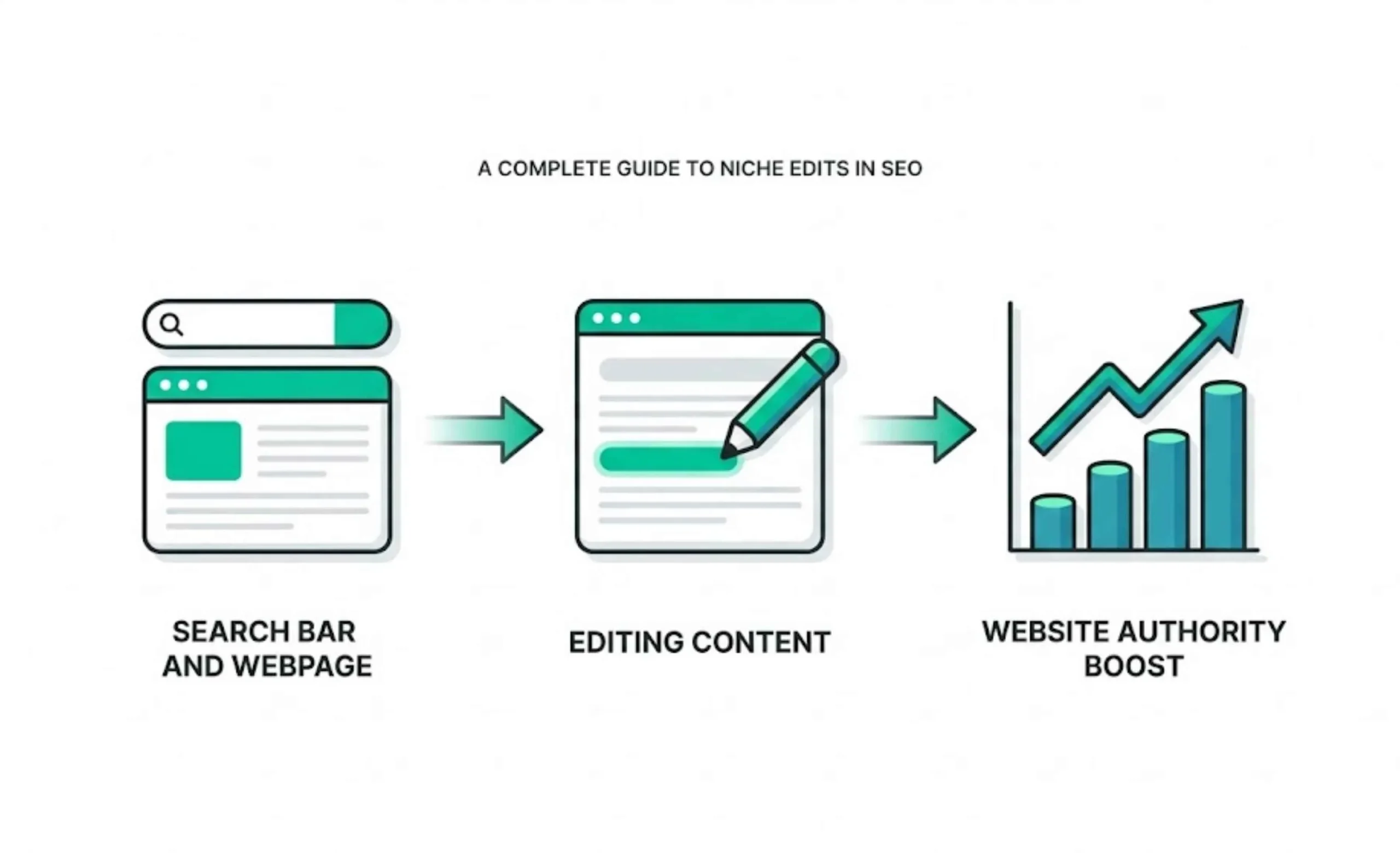
Building backlinks is one of the most discussed parts of SEO, but not every backlink is created equal. If you’ve been researching strategies such as ndexsy niche edits or searching for niche edits indexsy, you’ve probably noticed how often contextual link placements are recommended for improving a website’s authority and visibility. But what exactly makes a niche edit valuable, and does simply inserting a link into an existing article really help your SEO?
A niche edit, also known as a contextual link insertion, places your backlink inside an already-published piece of relevant content. Unlike a guest post, you don’t need to create an entirely new article. Instead, you find an existing page where your link can naturally add value for readers.
What Is a Niche Edit?
A niche edit is an SEO backlink placed naturally within an existing piece of content on another website.
Instead of publishing a brand-new article containing your backlink, you find an already-published page that is relevant to your topic and add a contextual link to your website.
For example, imagine you operate a website about digital marketing. An existing article on another website discusses SEO link building strategies. If a relevant sentence can naturally reference your guide about backlinks, a link to your page can be added to that existing article.
This type of backlink is commonly called a:
- Niche edit
- Contextual link
- Curated link
- Link insertion
- Existing-content backlink
The important part is not simply inserting a link. The page, website, surrounding content, anchor text, and reason for linking should all make sense.
Simple Example of a Niche Edit
Suppose an existing article says:
Building high-quality backlinks is an important part of a successful SEO strategy.
You have a detailed guide about link building.
A natural edit might expand the sentence to:
Building high-quality backlinks is an important part of a successful SEO strategy, especially when links come from relevant and trustworthy websites.
Your relevant resource could then be linked from the appropriate phrase.
The goal is to make the link useful to the reader rather than simply placing a backlink for search engines.
How Do Niche Edits Work?
The basic process behind a niche edit is relatively simple.
You first identify a website with relevant content. Then you find an existing article that is closely related to your target page.
After that, you determine whether your link can be added naturally without making the content awkward or misleading.
A typical process looks like this:
- Choose your target page.
- Identify relevant websites.
- Analyze the websites and their existing content.
- Find suitable articles.
- Check the article’s relevance and quality.
- Choose a natural anchor text.
- Add the contextual link.
- Confirm that the edited page remains useful and readable.
- Monitor the backlink and its surrounding page.
The quality of the process matters more than the number of links you build.
Ten highly relevant backlinks can potentially be more useful than dozens of links from unrelated websites.
Niche Edit vs Guest Post
One of the most common questions is the difference between a niche edit and a guest post.
Both can be used as backlink-building strategies, but they work differently.
Niche Edit
With a niche edit, you place a link inside content that already exists.
You usually don’t create the entire article from scratch.
Guest Post
With a guest post, you create a new article and publish it on another website. Your backlink is included naturally within the new content.
Here are some key differences:
| Feature | Niche Edit | Guest Post |
|---|---|---|
| Content | Existing article | New article |
| Link placement | Existing content | Newly published content |
| Content creation | Usually limited | Required |
| Publication | Already indexed page may exist | New publication |
| Relevance | Depends on selected page | Can be planned from the start |
| Outreach | Usually needed | Usually needed |
| Cost | Can vary | Can vary |
Neither method is automatically better.
The quality and relevance of the website and page are more important than the label attached to the backlink.
Why Are Niche Edits Used in SEO?
The main reason marketers use niche edits is to obtain contextual backlinks from existing content.
A backlink can help search engines understand relationships between websites and topics. However, Google’s systems evaluate links in many ways, and there is no guarantee that a particular backlink will improve rankings.
Niche edits are attractive because the linking page may already have:
- Existing backlinks
- Organic search visibility
- Search engine history
- Relevant content
- Internal links
- Established topical context
- Existing readers
When these factors align, an existing page can provide a useful environment for a contextual reference.
However, you should never assume that an old article automatically provides a powerful backlink.
What Makes a Good Niche Edit?
A good niche edit should look like a legitimate editorial reference.
Several factors matter.
1. Topical Relevance
Relevance is one of the most important factors.
The linking website should be related to your industry, and the specific article should ideally discuss a topic connected to your target page.
For example, a backlink from a marketing article to an SEO guide makes sense.
A backlink from an unrelated entertainment article to a B2B software page may look much less natural.
2. Contextual Placement
The backlink should appear within meaningful content.
A link surrounded by relevant sentences is generally more useful to readers than a link dropped into an unrelated paragraph.
3. Quality Content
Don’t focus only on domain metrics.
Read the actual article.
Ask:
- Is the article useful?
- Is it well written?
- Does it satisfy search intent?
- Does it contain original information?
- Does it appear maintained?
- Does the website publish useful content?
- Are there excessive outbound links?
These questions can reveal problems that metrics alone cannot.
4. Relevant Anchor Text
The anchor text should describe the linked page accurately.
For example, if your page explains technical SEO, an anchor such as technical SEO guide may make sense when it fits naturally into the sentence.
Avoid forcing exact-match keywords into every backlink.
5. Editorial Reason
There should be a genuine reason for the link to exist.
If removing the link would make the sentence completely unchanged, the link may not be adding much value.
A stronger contextual link supports the reader by providing additional information.
What Is the Difference Between a Niche Edit and a Link Insertion?
In SEO discussions, niche edit and link insertion are often used interchangeably.
Both generally refer to adding a backlink to existing content.
However, some SEO providers use the terms differently.
For example, a provider may call every backlink added to an old article a link insertion, while using “niche edit” specifically for a link placed inside a highly relevant article.
There is no universally accepted distinction.
When buying or evaluating a service, focus less on the label and more on:
- Website quality
- Page relevance
- Traffic
- Organic keywords
- Link placement
- Content quality
- Anchor text
- Link attributes
- Editorial standards
Are Niche Edits Good for SEO?
Niche edits can be useful as part of a broader SEO strategy, but they aren’t a guaranteed ranking shortcut.
The value of a backlink depends on many factors, including the quality and relevance of the linking page and website.
A natural contextual link from a respected, relevant website can be a useful part of a site’s backlink profile.
On the other hand, buying large quantities of manipulative links purely to influence rankings can create risks.
Google’s guidance has long emphasized the importance of natural, useful links and warns against link schemes designed to manipulate search rankings.
For this reason, the safest approach is to prioritize relevance, usefulness, quality, and editorial integrity.
Do Niche Edits Still Work?
Yes, contextual backlinks can still have SEO value, but you shouldn’t think of niche edits as a magic ranking technique.
Search engines have become increasingly sophisticated at evaluating websites, content, links, and overall site quality.
Simply obtaining a backlink from a website with a high domain rating doesn’t guarantee improved rankings.
For example, a website might have a high third-party authority score but:
- Little relevant traffic
- Many paid links
- Large numbers of unrelated articles
- Low-quality content
- A history of expired domains
- Excessive outbound links
That’s why SEO professionals should evaluate the actual website instead of relying on one metric.
How to Find Good Niche Edit Opportunities
Finding good niche edit opportunities requires research.
Start by defining the page you want to promote.
For example, suppose your target page is:
How to Buy Quality Backlinks
You could search for existing articles about:
- Link building
- SEO strategies
- Off-page SEO
- Backlink strategies
- Digital marketing
- Search engine optimization
- Content marketing
You can then evaluate pages within those topics.
Look for Existing Relevant Articles
An ideal page should already discuss a topic related to your resource.
The closer the relationship, the easier it is to create a natural contextual connection.
Analyze Organic Traffic
Traffic isn’t everything, but it can provide useful information.
Look at the page’s estimated organic traffic and keyword rankings using an SEO tool such as Ahrefs or Semrush.
A page ranking for relevant terms may be more valuable than a page that has strong-looking domain metrics but receives virtually no organic visibility.
Check Referring Domains
Look at how many websites link to the page.
A page with genuine backlinks may have more established authority than an isolated page with no external references.
However, backlink quantity should never be evaluated without quality.
Check the Website’s Outbound Links
This is an important quality-control step.
If an article contains dozens of commercial links pointing to completely unrelated industries, that can be a warning sign.
Look at the site’s overall linking behavior.
Important Metrics to Check Before Buying a Niche Edit
SEO tools provide many metrics, but you should not rely on only one.
Here are several useful metrics to consider.
Domain Rating or Domain Authority
Third-party tools provide metrics such as Domain Rating and Domain Authority to estimate the strength of a website’s backlink profile.
These are useful for comparison, but they are not Google ranking scores.
A website with DR 70 isn’t automatically better than every website with DR 40.
Organic Traffic
Organic traffic can help you determine whether the website actually attracts visitors through search.
A website receiving consistent relevant traffic can be more interesting than one with a high authority score but little search visibility.
Organic Keywords
Check what keywords the website ranks for.
You want to see genuine keywords that relate to the site’s topic.
Referring Domains
A healthy backlink profile generally contains links from a variety of relevant domains.
Page-Level Strength
Don’t analyze only the domain.
The specific page receiving your link matters too.
A strong domain doesn’t mean every page on it has equal value.
Niche Edit Anchor Text Strategy
Anchor text is another important part of backlink strategy.
Anchor text is the clickable text used for a hyperlink.
For example:
SEO link building guide
could link to a page about link building.
A natural backlink profile usually contains different types of anchor text.
These may include:
- Branded anchors
- Naked URLs
- Generic anchors
- Partial-match anchors
- Relevant descriptive anchors
- Occasional exact-match anchors
Branded Anchors
A branded anchor uses your company, website, or brand name.
Example:
BlessifyNow
Generic Anchors
These use phrases such as:
- Read more
- This guide
- Learn more
- This resource
Partial-Match Anchors
These include part of your target keyword.
For example, if your target keyword is “buy backlinks,” a partial anchor could be:
quality backlink strategies
Exact-Match Anchors
An exact-match anchor exactly matches the target keyword.
These should not be forced into every backlink.
A natural backlink profile doesn’t require every link to use the same keyword.
Should You Use Exact Match Anchors for Niche Edits?
Be careful with exact-match anchors.
If every backlink pointing to a page uses the exact same commercial keyword, the backlink profile may look unnatural.
Instead, create a varied and contextually appropriate anchor profile.
The anchor should fit the sentence first.
SEO comes second.
A reader shouldn’t feel that a keyword was inserted just to manipulate rankings.
Niche Edit Pricing
The cost of niche edits varies considerably.
Providers may charge based on:
- Domain authority
- Domain rating
- Organic traffic
- Website niche
- Page authority
- Link placement
- Website reputation
- Traffic requirements
- Country
- Content quality
- Link type
A backlink on a small niche website can cost significantly less than an editorial placement on a highly authoritative publication.
Be suspicious of offers that promise extremely powerful links for unrealistically low prices.
Cheap doesn’t always mean bad, but price alone should never determine quality.
Read more : Buy Backlinks in 2026: How to Buy Quality Backlinks Without Getting Penalized
Why Cheap Niche Edits Can Be Risky
Some low-cost backlink packages rely on websites that exist primarily to sell links.
You may receive a list of domains with impressive metrics, but the actual websites could have:
- Hundreds of unrelated posts
- Excessive sponsored content
- Weak editorial standards
- Very little organic traffic
- Repeated commercial anchor text
- Strange outbound links
- Thin content
- Obvious link-selling patterns
Before buying, inspect several websites manually.
If the website looks like a backlink marketplace rather than a real publication, proceed carefully.
Niche Edits vs Paid Links
This distinction is important.
A niche edit describes how the backlink is placed.
A paid link describes how the placement may have been obtained.
A niche edit can be acquired through an editorial relationship, outreach, content partnership, or other method.
If money is exchanged specifically for a link intended to manipulate rankings, Google’s policies around link spam become relevant.
Therefore, don’t assume that every niche edit is automatically safe simply because it appears inside existing content.
The intent and nature of the link matter.
Are Niche Edits Safe?
There is no backlink-building method that can guarantee zero risk.
The safest approach is to focus on links that provide genuine value to users and fit naturally within relevant editorial content.
Avoid mass-produced link schemes and networks built primarily for manipulating rankings.
Instead, think about every backlink from a reader’s perspective:
Would this link make sense if Google didn’t exist?
If the answer is yes, that’s a much healthier starting point.
Common Niche Edit Mistakes
Many SEO campaigns fail because they focus on quantity instead of quality.
Here are some common mistakes.
Mistake 1: Choosing Websites Only by DR
A high DR doesn’t guarantee a valuable backlink.
Always check traffic, relevance, content, backlinks, and website quality.
Mistake 2: Ignoring Page Relevance
A relevant domain isn’t enough.
The specific article should also make sense for your link.
Mistake 3: Using the Same Anchor Everywhere
Repeated exact-match anchors can create an unnatural-looking backlink profile.
Use varied, relevant anchors.
Mistake 4: Buying Hundreds of Links Quickly
Suddenly acquiring large numbers of low-quality backlinks isn’t a sustainable SEO strategy.
Build links at a pace that makes sense for your website and overall marketing activity.
Mistake 5: Ignoring Outbound Link Patterns
If a website links to every possible industry, that’s a warning sign.
Look at the site’s overall content and linking behavior.
Mistake 6: Focusing Only on Metrics
DR, DA, traffic, and other metrics are useful.
But manual quality checks are still necessary.
How to Evaluate a Niche Edit Website
Before purchasing a backlink, use a simple checklist.
Website Quality Checklist
Check:
- Is the website genuinely relevant?
- Does it publish useful content?
- Does it have real organic traffic?
- Does it rank for relevant keywords?
- Does it have legitimate referring domains?
- Are the articles well written?
- Does the website have a clear niche?
- Does it have excessive sponsored content?
- Does it contain large numbers of unrelated links?
- Does the page have genuine search visibility?
If several answers are negative, move on.
How to Choose the Right Page for a Niche Edit
The page should ideally meet three conditions.
First: It should be relevant to your target page.
Second: It should already have some search visibility or authority.
Third: Your link should improve the reader’s experience.
For example, if an article explains how to perform keyword research, linking to a detailed keyword research tutorial makes sense.
But inserting a link to an unrelated product simply because the website has high DR does not create a strong contextual relationship.
Can Niche Edits Improve Referral Traffic?
Yes, they can potentially generate referral traffic when the link is placed on a page that receives real visitors.
This is one reason to evaluate organic traffic and page relevance rather than focusing exclusively on authority metrics.
A relevant link can send visitors who are already interested in your subject.
For example, a link from a popular SEO tutorial to your SEO tool could generate targeted referral visitors.
That traffic can be valuable even if you ignore its potential SEO impact.
Niche Edits for Local SEO
Niche edits can also be considered as part of a local SEO strategy, but local relevance becomes especially important.
For a local business, relevant links from:
- Local publications
- Industry websites
- Regional blogs
- Business organizations
- Community websites
- Local resources
may make more sense than unrelated websites with high authority metrics.
For example, a plumbing company in Chicago would generally benefit more from relevant local and home-improvement resources than from an unrelated website about gaming.
Niche Edits for New Websites
New websites often have limited backlink profiles.
Contextual backlinks may be one part of a broader authority-building campaign.
However, don’t build backlinks before creating a strong website foundation.
Your site should have:
- Helpful content
- Clear topical structure
- Strong internal linking
- Good technical SEO
- Fast and usable pages
- Clear navigation
- Original information
- Strong search intent alignment
Backlinks work best when they support a website that already deserves to rank.
How Many Niche Edits Should You Build?
There is no universal number.
The right quantity depends on:
- Your niche
- Competitor backlink profiles
- Website age
- Existing authority
- Content quality
- Search competition
- Link acquisition opportunities
- Marketing budget
Instead of setting an arbitrary goal such as “100 niche edits,” analyze the backlink profiles of competing pages.
Look for patterns.
How many referring domains do top-ranking pages have?
What types of websites link to them?
Are those links editorial, local, industry-specific, resource-based, or something else?
Use competitor analysis to understand the market instead of blindly copying a backlink count.
Do Niche Edits Help New Pages Rank?
They can contribute to a page’s overall authority, but rankings depend on many factors.
A backlink alone won’t compensate for poor search intent, weak content, technical problems, or lack of topical relevance.
If you are promoting a new article, first make sure the page is genuinely useful.
Then build relevant references from other websites where appropriate.
How to Build Niche Edits Naturally
A sustainable strategy focuses on relevance rather than volume.
Here is a simple framework:
Step 1: Create a Valuable Resource
Build content worth referencing.
This could be:
- Original research
- A detailed guide
- Statistics
- A useful tool
- An industry study
- A comprehensive tutorial
- An expert resource
Step 2: Find Relevant Existing Content
Search for websites that already discuss your topic.
Step 3: Identify a Content Gap
Look for places where your resource could genuinely provide additional information.
Step 4: Contact the Website Owner
Explain why your resource is relevant.
Don’t simply send a message saying, “I want a backlink.”
Explain the value for their readers.
Step 5: Suggest a Natural Placement
Show the publisher how your resource could fit.
The final decision should still be based on editorial judgment.
Niche Edit Outreach Example
A good outreach message should be short and personalized.
Instead of sending a generic message to hundreds of websites, mention the specific article and explain why your resource would be useful.
The objective is to start a genuine conversation rather than treating the website like a link inventory.
Niche Edits and Topical Authority
Topical relevance is increasingly important in modern SEO.
Suppose your website focuses on personal finance.
Links from relevant finance, investing, banking, budgeting, and business websites can help establish relationships around your subject.
This doesn’t mean you should reject every link outside your exact niche.
A link can still be useful when the broader context makes sense.
The key is maintaining a natural overall backlink profile.
Niche Edit Quality vs Quantity
If you have a limited budget, prioritize quality.
For example, instead of buying dozens of low-quality placements, you may choose a smaller number of highly relevant websites with genuine audiences.
A useful way to think about it is:
Relevance + Quality + Context + Trust > Raw Link Quantity
There is no magic formula, but this mindset helps prevent poor backlink decisions.
Should You Buy Niche Edits?
Whether you should buy niche edits depends on your SEO strategy and risk tolerance.
If you decide to use paid placements, research each website carefully and understand that payment does not guarantee ranking improvements.
A strong SEO campaign should also include other link acquisition methods.
These can include:
- Digital PR
- Expert contributions
- Resource pages
- Industry partnerships
- Original research
- Linkable assets
- Brand mentions
- Relevant business directories
- Community involvement
- Helpful content promotion
A diversified strategy is generally stronger than relying on one backlink method.
How Niche Edits Fit Into a Link-Building Strategy
Think of niche edits as one component rather than your entire strategy.
A balanced campaign might include:
- High-quality content
- Internal linking
- Digital PR
- Relevant outreach
- Editorial mentions
- Industry relationships
- Brand citations
- Resource links
- Selective contextual placements
This creates a more natural and diversified backlink profile.
Niche Edit Pros and Cons
Pros
- Uses existing content
- Can provide contextual relevance
- May reach pages with established search visibility
- Can potentially generate referral traffic
- Doesn’t require creating an entirely new guest post
- Can support a diversified backlink strategy
Cons
- Quality varies significantly
- Some sellers use low-quality websites
- High DR doesn’t guarantee value
- Paid placements can create policy concerns
- Poor anchor text choices can look unnatural
- Some websites sell excessive numbers of links
- There is no guaranteed ranking improvement
Niche Edit Checklist
Before approving a backlink, ask yourself:
- Is the website relevant?
- Is the page relevant?
- Does the page receive organic traffic?
- Does the website have genuine content?
- Are the site’s backlinks legitimate?
- Does the link make sense contextually?
- Is the anchor text natural?
- Does the website have excessive commercial links?
- Is the placement useful to readers?
- Would I still want this link if SEO didn’t exist?
If the answer is yes to most of these questions, the opportunity may be worth further consideration.
Frequently Asked Questions
What is a niche edit in SEO?
A niche edit is a backlink added to an existing article or webpage on another website. The link is placed within relevant content rather than publishing an entirely new article.
Are niche edits good for SEO?
Niche edits can be useful when they come from relevant, trustworthy websites and provide genuine value to readers. However, no backlink guarantees higher Google rankings.
What is another name for a niche edit?
Niche edits are also commonly called link insertions, contextual links, or curated links. The exact terminology can vary between SEO providers.
Are niche edits better than guest posts?
Neither is automatically better. Niche edits use existing content, while guest posts involve publishing new content. Website quality and relevance are more important than the format.
How much do niche edits cost?
Prices vary depending on website quality, relevance, traffic, authority, industry, and placement. Very cheap packages should be carefully evaluated before purchase.
What is the best anchor text for a niche edit?
The best anchor text is natural, relevant, and accurately describes the linked page. A healthy backlink profile should generally contain varied anchor text rather than relying on one exact-match keyword.
Can niche edits generate referral traffic?
Yes. If your link appears on a relevant page that receives visitors, it can potentially send targeted referral traffic to your website.
Conclusion
Niche edits can be a valuable part of a well-planned SEO strategy when they’re built around relevance, quality, and genuine value. Instead of focusing only on high DR or a large number of backlinks, look for existing pages that are relevant to your topic, have real search visibility, and can naturally benefit from your resource.
Whether you’re researching ndexsy niche edits, niche edits indexsy, or other contextual link-building services, always evaluate the website, page quality, organic traffic, anchor text, and overall backlink profile before investing.