
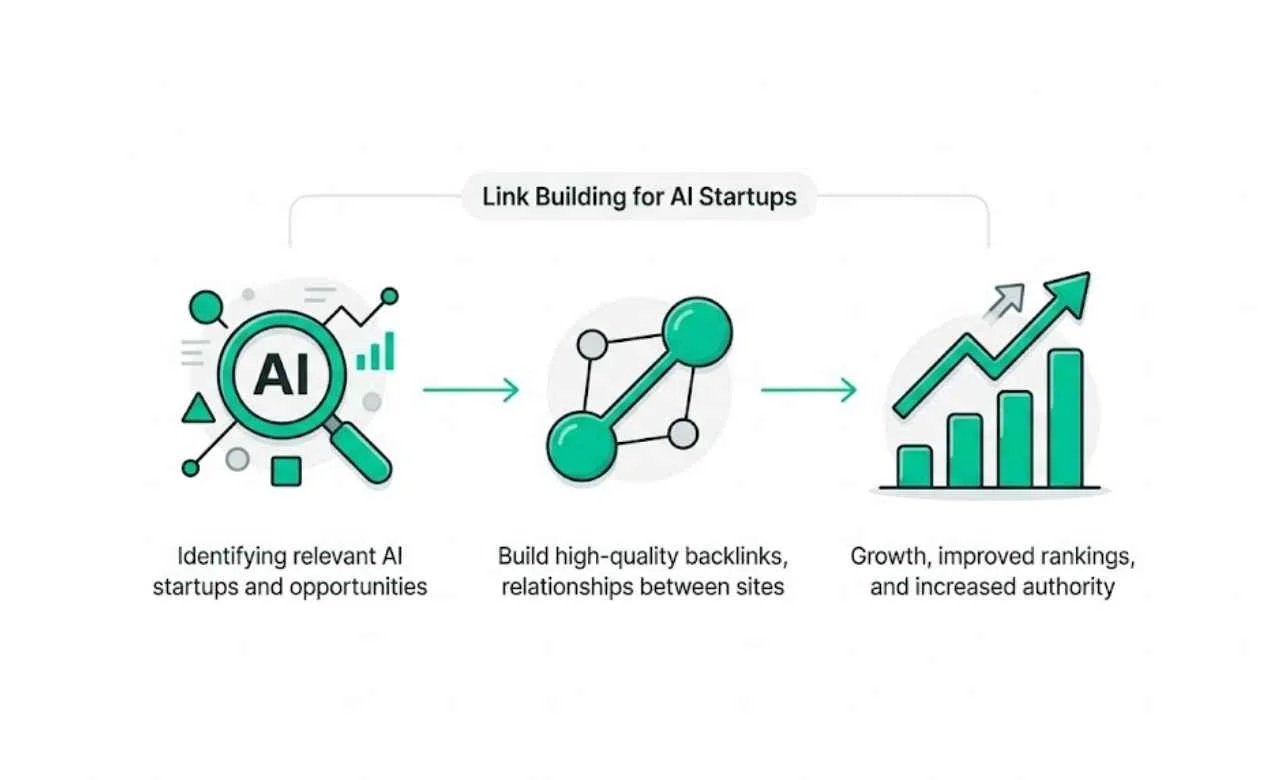
Artificial intelligence startups operate in one of the most hyper-competitive, fast-evolving landscapes in the modern digital economy. With hundreds of generative AI tools, enterprise LLM wrappers, machine learning APIs, and autonomous agent platforms launching weekly, standing out in organic search requires far more than standard on-page optimization and thin informational content.
Traditional off-page SEO playbooks—such as generic guest posting on generalist blogs, directory blast submissions, and link exchanges—consistently fail to deliver search equity or product adoption for AI software. To establish topical authority, earn competitive keyword rankings, and defend market position against legacy tech giants, technical founders and growth marketers must deploy surgical link acquisition frameworks.
This comprehensive guide details the exact link-building strategies, operational frameworks, outreach methodologies, and vetting protocols an enterprise-grade link building agency for AI startups uses to engineer sustainable, high-authority backlink profiles that drive customer acquisition and algorithmic trust.
Why Link Building for AI Startups Demands a Specialized Agency Strategy
Building backlinks for an artificial intelligence company is fundamentally different from ranking a local service business, a lifestyle publication, or a direct-to-consumer e-commerce brand. AI startups face unique structural hurdles that standard link-building agencies fail to understand:
[Traditional Agency Outreach] -----> Generic Tech Blogs -----> Zero Topical Authority / Low MRR
[Specialized AI Link Strategy] ---> Seed Sites + Dev Portals ---> High Entity Trust + High-Intent Signups
- Complex Product Semantics: An AI startup rarely sells a simple, intuitive widget. Whether your product is a vector database architecture, an automated retrieval-augmented generation (RAG) orchestration layer, or a specialized multimodal computer vision model, your off-page narrative must reflect deep technical competence. Outreach pitches drafted by generalist copywriters fall flat when pitched to machine learning practitioners, data engineers, and tier-one tech editors.
- Topical Velocity and Algorithm Updates: Search engine algorithms continuously evolve their understanding of information gain, neural matching, and topical authority. For AI-focused queries, search engines heavily weight natural language processing (NLP) entities, knowledge graph nodes, and semantic co-occurrences. Securing backlinks from irrelevant domains dilutes your entity mapping, confusing search engines about your core software category.
- The “Wrapper” Stigma: The market is flooded with low-moat software built on off-the-shelf APIs. Top-tier publications and authoritative engineering blogs actively ignore pitch emails from brands they perceive as superficial wrappers. A specialized agency knows how to frame your engineering innovations—such as custom fine-tuning, latency optimizations, proprietary benchmarks, or novel model architectures—into compelling editorial narratives that command tier-one coverage.
Navigating Google’s Helpful Content, Search Generative Experiences, and Entity SEO
Modern search ranking systems evaluate websites using advanced entity identification rather than simple anchor text string matching. Search engines map entities—discrete concepts, organizations, software products, and founders—within a vast semantic knowledge graph.
The Role of Co-occurrence and Semantic Proximity
When a high-authority publication links to your AI startup, algorithms assess the surrounding textual context using NLP models. The backlink carries significantly more weight if the referring sentence and paragraph contain relevant Latent Semantic Indexing (LSI) terms, entity co-occurrences, and technical vocabulary:
| Core Entity | High-Value Semantic Co-Occurrences | Irrelevant Context (Dilutes Equity) |
| Enterprise RAG Platform | Vector embeddings, semantic search, latency, context window, token throughput | Affordable software, cheap business tools, easy digital marketing |
| AI Code Assistant | IDE extension, AST parsing, context caching, developer productivity, code completion | Work productivity tricks, computer shortcuts, online apps |
| Generative Vision API | Diffusion models, LoRA weights, inference cost, GPU orchestration, prompt fidelity | Pretty pictures, image editor, fun artistic websites |
A specialized link-building firm ensures that every placement anchors your brand firmly inside your target topical cluster. This structured association informs both traditional organic rankings and search engine AI overviews, positioning your software as a verified, cited data source when generative search models compile answers for prospective enterprise buyers.
High-Leverage Link Building Strategies Engineered for AI Companies
Achieving double-digit growth in organic traffic requires modern digital PR, technical thought leadership, and algorithmic alignment. The following six strategic pillars represent the highest-yield link acquisition channels for early-stage and venture-backed AI companies.
       ┌────────────────────────────────────────────────────────┐
       │     Core Pillars of AI Startup Link Acquisition        │
       └────────────────────────────────────────────────────────┘
                                    │
    ┌────────────────┬──────────────┴───────────────┬────────────────┐
    ▼                ▼                              ▼                ▼
[Proprietary     [Open-Source &                 [Technical      [Data-Driven
 Research]       Developer Hubs]               PR Angles]       Free Tools]
1. Proprietary Industry Benchmarks and Model Evaluations
AI engineers and CTOs constantly search for objective data. Publishing comparative benchmarks—such as model latency tests, inference cost calculations across cloud providers, token-per-second throughput metrics, or context-window degradation curves—creates an automated, self-sustaining backlink engine. When developers, academics, and tech journalists report on model capabilities, they naturally cite and link to the original primary research.
2. Open-Source Integrations, Framework Hubs, and GitHub Citations
If your startup maintains open-source libraries, SDKs, or extensions (e.g., PyTorch wrappers, Hugging Face spaces, LangChain integrations), your agency can turn engineering assets into high-authority digital references. Securing documentation links, ecosystem integrations, and community repository citations signals immense technical validity to both search engines and developer audiences.
3. Contrarian Technical Opinions and Founder-Led Digital PR
Generic advice gets zero pickup. However, founder perspectives that challenge current industry dogmas—such as “Why Small Language Models (SLMs) Will Replace Giant Foundation Models in the Enterprise” or “The Hidden Compute Costs of In-House Model Training”—secure prime interview slots, podcast citations, and op-ed backlinks across respected tech news outlets and venture capital publications.
4. Reverse Engineering AI Trends and Systematic Data Studies
Scraping, aggregating, and analyzing public AI usage patterns yields viral editorial assets. For example, releasing a study analyzing “10 Million Prompts: The True Failure Rate of Commercial Code Completion Tools” generates inbound links from mainstream technology reporting outlets, newsletters, and academic roundups looking for authoritative empirical figures.
5. Interactive Calculators, Cost Modeling Tools, and Token Estimators
Engineers and enterprise procurement teams need functional utilities. Building simple, high-utility web tools—such as an interactive GPU cloud compute cost estimator, an LLM fine-tuning ROI calculator, or a prompt token visualizer—earns passive backlinks from resource roundups, developer documentation, and engineering forum discussions indefinitely.
6. Curated Ecosystem Glossaries and Living Knowledge Repositories
Creating an authoritative, peer-reviewed AI taxonomy or technical glossary that provides mathematically precise definitions for concepts like speculative decoding, quantization algorithms, or attention mechanisms captures high-intent reference links from university courses, research papers, and software documentation.
Digital PR and Data-Driven Link Assets: The AI Founder’s Secret Weapon
Digital PR for AI startups is not about blasting press releases across wire services; it is about packaging complex technical phenomena into compelling news hooks that journalists can easily parse.
To run an effective digital PR campaign for an AI software company, an agency executes a repeatable pipeline:
- Hypothesis Formulation: Identify a current pain point or unresolved debate within machine learning (e.g., model hallucination rates, API pricing wars, security vulnerabilities in autonomous agent permissions).
- Data Ingestion and Analysis: Extract proprietary data from your platform (anonymized for user privacy) or ingest large-scale public datasets using Python and web scrapers to surface unique empirical findings.
- Statistical Visualization: Convert complex regressions and data distributions into clean, embeddable vector graphics, interactive charts, and publication-ready infographics.
- Targeted Editorial Pitching: Rather than blast mass lists, distribute the asset directly to verified technology beat reporters, machine learning columnists, and enterprise software analysts under short-term exclusivity agreements.
A single well-executed data campaign routinely earns 30 to 80+ high-authority editorial links from publications such as VentureBeat, TechCrunch, Wired, and Ars Technica. These referring domains act as powerful authority seeds that permanently elevate the baseline ranking power of your entire domain.
Reverse-Engineering Competitor Backlink Gaps in the Machine Learning Ecosystem
To scale past competing AI platforms, you must dissect precisely where their domain authority originates. A specialized agency does not merely export a competitor’s backlink list; they classify the underlying mechanisms powering their link profile.
Competitor Profile Ingestion (Ahrefs / Semrush APIs)
                       │
                       ▼
         Topical Cluster Classification
  ┌────────────────────┬────────────────────┐
  ▼                    ▼                    ▼
Resource Links     Media Mentions      Integration Hubs
  │                    │                    │
  ▼                    ▼                    ▼
[Gap Analysis vs. Client Product & Content Assets]
                       │
                       ▼
Surgically Target Same High-Yield Domains via Superior Assets
The Semantic Gap Matrix
By mapping the backlink equity of the top three competitors in your AI sub-niche, your agency identifies high-value domains linking to obsolete, out-of-date, or inferior resources:
| Competitor Link Type | Root Cause of Link | Agency Counter-Play for Your AI Startup |
| Outdated Research Link | Competitor published a 2023 benchmark on inference latency. | Release an updated, comprehensive 2026 benchmark covering newer model architectures; conduct outreach to replace stale links. |
| Integration Directories | Competitor has integrations listed on major developer hubs. | Build native API connectors or open-source webhooks; claim authoritative partner profile links on verified platforms. |
| Curated Resource Guides | Competitor listed under “Best AI Tools for Workflow Automation.” | Pitch editorial curators with a side-by-side feature comparison emphasizing your unique technical advantages. |
This methodology transforms competitor intelligence into an actionable outreach blueprint, ensuring your team only pursues placements with proven conversion value and link juice.
How to Build Links from High-Authority Developer Hubs, GitHub, and Open-Source Platforms
Software developers and engineering leaders possess an aggressive filter against marketing hyperbole. Pitching a developer blog requires technical accuracy and legitimate community contribution.
To win backlinks across developer hubs including GitHub repositories, Stack Overflow discussions, Dev.to, Hashnode, and official documentation networks an agency utilizes developer-relations-led link outreach:
- Open-Source Code Contributions: Sponsoring, contributing documentation, or submitting pull requests that add value to widely used machine learning packages often earns clean, high-equity citations within official project Readmes, release notes, and GitHub organization pages.
- Technical How-To Tutorials: Commissioning real software engineers to write deep, code-heavy walkthroughs demonstrating how to solve an edge-case engineering problem using your SDK. These tutorials naturally earn citations from other engineers documenting their workflows on medium-to-high authority developer publications.
- Curated Community Lists (Awesome-Lists): Authoritative GitHub repositories curated around specific frameworks (e.g., Awesome-LLMOps, Awesome-Vector-Search) are indexed by search engines as trusted technical hubs. Securing inclusion for your software directly links your entity with the broader open-source ecosystem.
Anchor Text Optimization for Algorithmic Safety and Entity Alignment
Over-optimizing anchor text with repetitive, exact-match commercial keywords (e.g., “best AI sales tool”) is the fastest way to trigger an algorithmic link penalty from modern spam detection systems.
An experienced AI link-building partner engineers a balanced, natural anchor text distribution designed to maximize semantic relevance while insulating your site against manual actions or algorithmic filters:
[45% - 50%] Brand & Entity Anchors (e.g., "CognitivePulse", "CognitivePulse AI engine")
[25% - 30%] Topical & Descriptive Anchors (e.g., "real-time model monitoring", "automating vector search")
[15% - 20%] URL & Navigational Anchors (e.g., "cognitivepulse.com/platform", "source")
[ 5% - 10%] Exact-Match Tactical Anchors (Reserved strictly for tier-one editorial features)
By ensuring that the vast majority of inbound anchors reinforce your brand name and its topical associations rather than mechanical commercial phrases, search engines view your link velocity as an authentic surge in industry market recognition.
Identifying and Vetting Link Opportunities: Eliminating Toxic Link Farms and PBNs
The SEO ecosystem is flooded with link brokers selling placements on low-quality private blog networks (PBNs), hacked domains, and artificial link farms disguised as genuine tech websites. For an AI startup, earning links from these toxic sources risks algorithmic suppression.
Every potential backlink partner must pass a rigorous multi-stage vetting rubric before outreach commences:
Prospective Domain
       │
       ├─► Organic Traffic Trend: Is traffic stable or growing? (Drop >50% = Immediate Discard)
       ├─► Referring Domain Quality: Does the site have natural editorial inbound links?
       ├─► Traffic-to-Keyword Ratio: Does the site rank for competitive, non-branded tech terms?
       ├─► Outbound Link Velocity: Is the site linking out to casino, crypto, or unrelated niches?
       └─► Editorial Integrity: Are articles written by real, verifiable technology journalists?
- Zero-Tolerance Domain Metrics: Never evaluate a site purely on Domain Rating (DR) or Domain Authority (DA). Link farms systematically manipulate DR by firing automated redirects into expired domains.
- Organic Search Footprint: A viable target domain must attract sustained organic search traffic from top-tier economies (US, UK, EU, Canada) and rank organically for competitive tech and enterprise software terms.
- Clean Outbound Backlink Ratios: If a technology site routinely sells backlinks to offshore gambling, adult, essay-writing, or unregulated financial services, their outbound equity is entirely devalued by search engine classifiers.
Content Marketing Synergy: Creating Linkable Assets That Convert
Link building cannot operate in a silo. If your agency drives high-equity backlinks to thin landing pages containing generic marketing copy, your bounce rates will soar and your conversions will stall. Link acquisition must integrate directly with an elite product-led content strategy.
       [Top-of-Funnel Linkable Asset] (Original Data / Deep Engineering Guide)
                                      │
                               (Earns 50+ Backlinks)
                                      │
                                      ▼
                        Strategic Internal Page Links
                                      │
        ┌─────────────────────────────┴─────────────────────────────┐
        ▼                                                           ▼
[Mid-Funnel Comparison Pages]                           [Bottom-of-Funnel Product Pages]
(e.g., "Tool vs. Tool Alternative")                     (e.g., "Enterprise RAG API")
By constructing thematic hub-and-spoke content architectures, high-authority link equity gained by your top-of-funnel linkable assets flows systematically down to your high-intent, bottom-of-funnel commercial landing pages through contextual internal links. This internal link equity distribution powers rapid ranking improvements for high-intent keywords without requiring risky exact-match anchor building directly to your sales pages.
The Perils of Generic Outreach: Customizing Pitches for Tech Editors and Founders
Generic email outreach templates—such as “I loved your recent post, can I contribute a guest post?”—convert at less than 0.5% in the technology sector. Machine learning editors and enterprise content managers delete these messages instantly.
High-converting outreach for AI brands relies on hyper-personalized, value-first messaging that treats link placement as an editorial collaboration:
The “Data Augmentation” Outreach Framework
Plaintext
Subject: Data point on your [Topic] breakdown: [Specific Metric Client Found]

Hi [Name],

I saw your recent analysis on [Specific Technical Problem, e.g., GPU memory bottlenecks during LLM fine-tuning].

Our engineering team at [Startup Name] just ran an internal benchmark testing this across 500 instances of [Model Architecture], and we discovered that [Surprising Data Finding, e.g., memory overhead spikes by 34% when using specific quantization libraries].

We open-sourced the raw findings and reproduction notebook here: [URL]

If you're updating the piece or revisiting this subject down the line, feel free to use the data points or visualizations. Happy to share the raw methodology if helpful!

Best,
[Founder / Head of Research Name]
This pitch succeeds because it provides objective value, respects the recipient’s expertise, and eliminates the transactional tone of generic SEO outreach.
Scaling B2B SaaS Authority: Integrating Product-Led Growth with Link Building
For product-led AI companies, your software itself should function as a link generation engine. Integrating product-led growth (PLG) dynamics directly into your off-page SEO strategy creates compound, zero-marginal-cost link acquisition.
- “Powered By” Dynamic Attribution: If your AI tool generates embeddable widgets, automated charts, client-facing reports, or deployed customer interfaces, include a subtle, algorithmically compliant attribution link back to your root domain.
- Public Template Libraries and Recipes: Give users public URLs to share their workflows, prompts, custom fine-tuning scripts, and automation pipelines. When users share their customized configurations on forums, community platforms, and blogs, your site accumulates highly relevant user-generated links.
- Customer Success Co-Marketing: Systematically turn your high-performing enterprise deployments into published case studies. Provide the enterprise customer’s marketing team with professionally produced quotes, metrics, and PR copy that makes it effortless for them to feature your partnership on their corporate press pages and partner portals.
Measuring Real ROI: Beyond Vanity DR/DA to Revenue and Qualified Pipeline
Many agencies report vanity metrics: total links acquired, average DR, or total outreach volume. For an AI startup burning capital, vanity metrics do not validate marketing spend. Link building must map to organic visibility, qualified leads, and pipeline revenue.
[Link Acquisition Phase] ──► Velocity, Referring Domain Authority, Topical Relevance
                                      │
[Algorithmic Phase]      ──► Keyword Velocity, Top-3 SERP Infiltration, Impression Volume
                                      │
[Commercial Pipeline]    ──► Product Signups, API Trial Activations, Enterprise Demo Bookings
A sophisticated growth team tracks specific conversion milestones to measure backlink performance:
- Topical Search Visibility: Measure keyword growth across high-intent search clusters using Google Search Console and rank tracking platforms.
- Referring Domain Velocity: Ensure that the monthly net acquisition of unique, qualified referring domains trends upward month-over-month.
- Assisted Conversion Paths: Track organic traffic landing on authoritative linkable assets that subsequently navigates to sign-up pages using multi-touch attribution models.
- Knowledge Graph Ingestion: Monitor whether major search engines register your startup as a distinct entity, complete with structured data breadcrumbs and citations inside automated generative search summaries.
13. Avoiding Black-Hat Pitfalls and Algorithmic Penalties in the AI Era
As search engines deploy machine learning classifiers to combat automated web spam, low-grade link building practices carry catastrophic risks. AI startups must navigate around several perilous industry shortcuts:
- Mass Automated Guest Posting Schemes: Submitting hundreds of AI-generated articles across low-quality blog networks leaves clear algorithmic footprints. Modern spam-detection models easily identify content networks with shared ownership, identical hosting footprints, and unnatural interlinking patterns.
- Unvetted Link Purchases: Buying links directly from open marketplaces or unvetted freelance brokers frequently associates your domain with flagged spam networks, leading to complete removal from search engine indexes.
- Automated Forum and Social Profile Blasts: Using automated scripts to plant profile links and comment spam on developer forums or community platforms yields zero search equity and destroys your brand’s reputation within the developer ecosystem.
Read other article :Link Building Agency for SaaS: Strategies to Build High-Quality Backlinks
What to Look for When Hiring a Specialized Link Building Agency for Your AI Startup
Selecting an agency partner requires rigorous diligence. If an agency cannot demonstrate a deep grasp of software architectures and technical marketing, they cannot effectively represent your brand to high-tier publications.
Use the following evaluation criteria when vetting prospective link-building agencies:
                      Agency Evaluation Matrix
┌───────────────────────────┬───────────────────────────────────────────┐
│ Evaluation Criteria       │ Green Flags (Hire)                        │
├───────────────────────────┼───────────────────────────────────────────┤
│ Technical Literacy        │ Understands ML/LLM ecosystems natively    │
│ Transparency              │ Pre-approves target publications & drafts │
│ Outreach Strategy         │ 100% bespoke, personalized media pitching │
│ Quality Standards         │ Strictly vetted for organic search health │
│ Metric Accountability     │ Focuses on revenue, rankings, and traffic │
└───────────────────────────┴───────────────────────────────────────────┘
Insist on reviewing blinded case studies, real outreach pitch examples, and sample content assets produced for past software clients. If their pitch copy looks like generic promotional spam, pass immediately.
The Future of Links in Generative Engine Optimization (GEO) and Agentic Search
As search shifts from traditional ranked blue links toward interactive, conversational generative answers (such as Google’s Gemini-powered summaries, Perplexity AI, and autonomous agent web tools), the nature of link acquisition is undergoing a fundamental shift:
- From Simple PageRank to Information Retrieval Citation: Generative models do not rely solely on link graph mathematics; they employ neural rerankers to pull source citations from the most factually dense, authoritative text passages available. Securing backlinks from publications that these models ingest into their training and retrieval corpuses is crucial for brand visibility.
- Corroborated Entity Citations: To be cited in an AI-generated answer, your brand name must consistently co-occur with your software category across independent, highly trusted web sources. High-authority media placements, podcast mentions, and industry publications serve as the primary factual verification layers for large language models.
- Structured Data and Verifiable Proof: Clear schema markup, transparent author credentials, and verifiable technical data points ensure that both traditional web crawlers and autonomous agent frameworks can parse, evaluate, and cite your startup’s assets effortlessly.
FAQs
1. Why do AI startups need link building?
Link building helps AI startups earn backlinks from relevant websites, which can support search visibility and authority. It can also help attract referral traffic from industry-specific audiences.
2. What does a link building agency for AI startups do?
A link building agency researches relevant websites and creates strategies to earn quality backlinks for an AI startup. Services may include digital PR, guest posting, content outreach, and link prospecting.
3. What types of backlinks are best for AI startups?
Relevant, editorial backlinks from reputable technology, AI, SaaS, and business websites can be valuable for an AI startup. Quality and relevance generally matter more than simply collecting a large number of links.
4. How long does link building take for an AI startup?
Link building is usually a long-term SEO process, and results can vary based on competition, website authority, content quality, and backlink quality. Some links can be acquired quickly, while broader SEO improvements may take several months.
5. How do I choose a link building agency for my AI startup?
Look for an agency that uses relevant, transparent, and sustainable link building methods rather than relying on spammy networks. Review its process, reporting, target websites, and experience with AI, SaaS, or technology companies.
Conclusion
Building high-quality backlinks can help AI startups strengthen their online authority, improve search visibility, and attract relevant referral traffic. A specialized link building agency can develop a strategy around your niche, target audience, competitors, and SEO goals.
The key is to focus on relevant, authoritative, and natural backlinks rather than chasing a high link count. With consistent content, targeted outreach, digital PR, and ethical link building, an AI startup can build a stronger foundation for long-term organic growth.