
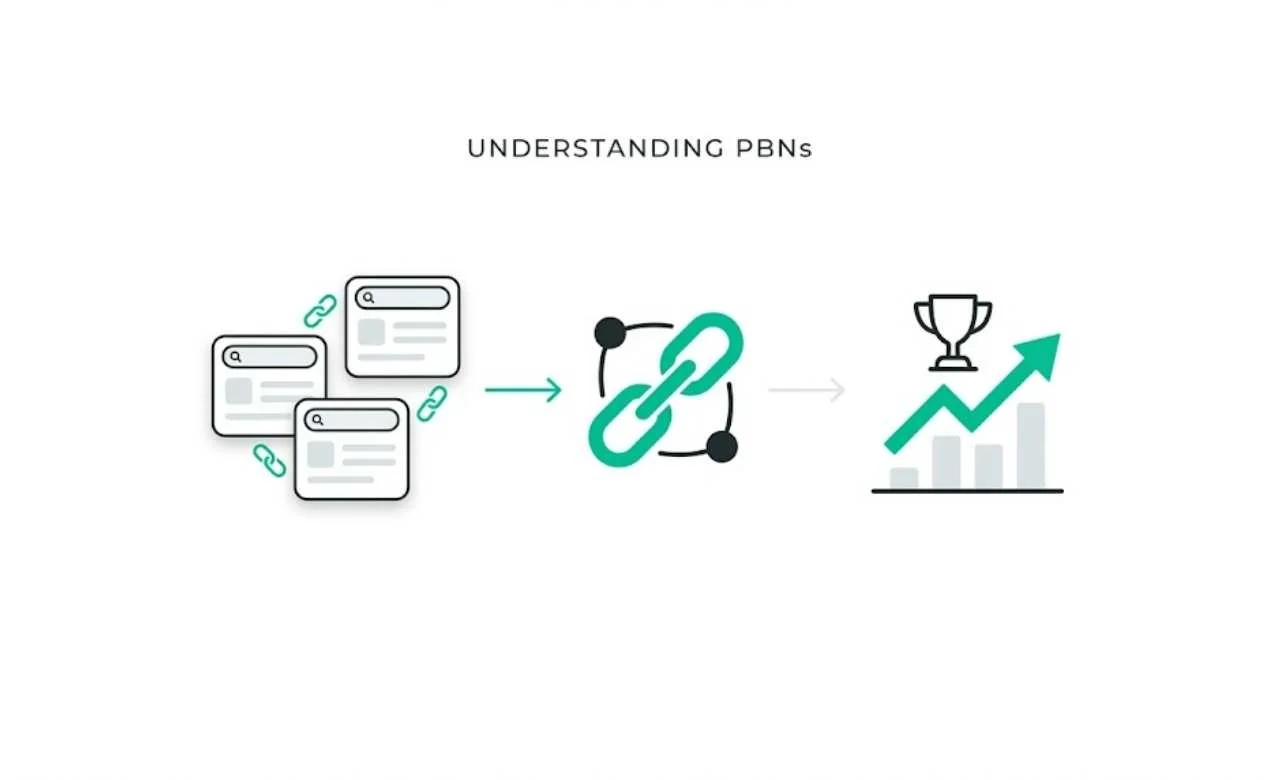
What if you could control the websites linking to your main site instead of waiting weeks for outreach and link-building opportunities? That’s the basic idea behind a PBN in SEO, or Private Blog Network a network of websites created or acquired to send backlinks to a primary website.
PBNs have become a controversial topic in the SEO world. They can provide greater control over backlinks, anchor text, and linking domains, but they also come with serious risks when used to manipulate search engine Private Blog Networks rankings. Some SEO professionals consider PBNs a shortcut for building authority, while others avoid them because of potential penalties and loss of visibility.
So, what is a PBN in SEO, how does a private blog network work, and why do SEOs use PBN backlinks? In this guide, you’ll learn how PBNs work, their potential benefits and risks, common PBN footprints, and safer alternatives for building a strong backlink profile.
What Is a PBN in SEO?
In search engine optimization, a Private Blog Network (PBN) is a collection of websites owned, controlled, and operated by a single entity for the sole purpose of passing authority traditionally referred to as “link juice” to one or more central domains, known in SEO parlance as the money site or main website.
       [ Expired Domain A ] (DA 38 / Clean History)
                 │
                 ├── [ Contextual DoFollow Link ] ──┐
                 │                                  │
       [ Expired Domain B ] (DA 44 / Clean History) │
                 │                                  ▼
                 ├── [ Contextual DoFollow Link ] ──> [ MONEY SITE ]
                 │                                  ▲ (Ranks for Target Keywords)
       [ Expired Domain C ] (DA 35 / Clean History) │
                 │                                  │
                 └── [ Contextual DoFollow Link ] ──┘
The underlying concept relies on an exploitation of Google’s core ranking foundation: PageRank. Google evaluates external hyperlinks as independent votes of confidence. When an authoritative, trustworthy website links to another, it signals to search engine algorithms that the destination contains valuable, relevant content.
Under natural conditions, earning quality backlinks is a slow, resource-intensive endeavor requiring webmaster outreach, digital PR, and exceptional content creation. A private blog network bypasses organic link acquisition entirely. Instead of pitching external editors and waiting for natural backlinks, the network operator purchases authoritative domains, rebuilds them into operational PBN websites, and manually inserts contextual, dofollow links pointing back to their primary commercial assets.
The word “Private” is central to the definition. A genuine PBN is engineered to remain invisible to competitors, web crawlers, and search engine evaluation systems. If a network’s ownership, hosting infrastructure, or operational patterns can be easily grouped, the network ceases to be private, exposing every connected asset to detection and penalization.
How Does a Private Blog Network Work?
A PBN operates by recycling the historical trust, equity, and authority of defunct web properties. The lifecycle of a private blog network relies on a continuous chain of domain acquisition, infrastructure deployment, content publication, and targeted link placement:
[ Domain Drops ] ──> [ Domain Research & Vetting ] ──> [ Uncorrelated Infrastructure ]
                                                                   │
                                                                   ▼
[ Money Site Optimization ] <── [ Strategic Link Placement ] <── [ Content Deployment ]
1. Domain Acquisition
Rather than registering brand-new domains with zero link equity, operators source expired domains or auction domains that previously belonged to legitimate businesses, academic institutions, organizations, or prominent blogs. These dropped domains carry an established backlink profile, existing domain authority, and historical equity built over years.
2. Infrastructure Obfuscation
Once acquired, the domains are launched on disparate web hosting environments. Operators deploy diverse content management systems, varied DNS configurations, unique nameservers, and different IP addresses to prevent automated algorithms from linking the sites to a single owner.
3. Site Reconstruction and Content Deployment
The sites are populated with fresh, relevant content designed to resemble authentic, independent web properties. In some cases, operators use web archives to recreate aspects of the original site’s thematic structure to preserve its topical relevance.
4. Strategic Link Placement
Within the published articles, operators embed contextual backlinks pointing directly to the money site. These links utilize calculated anchor text variations—balancing exact match anchors, partial match anchors, and branded anchors—to funnel ranking power to high-value commercial landing pages.
Because the operator retains total administrative access over the publishing platform, they bypass editorial gatekeepers, eliminate link decay, and determine the exact timing, placement, and semantic environment of every outbound link.
Why Do SEOs Use PBNs for Link Building?
Despite the constant threat of algorithmic detection, PBN SEO strategies remain prevalent across hyper-competitive, high-margin verticals such as affiliate marketing, legal services, finance, gaming, and real estate. The decision to use a private blog network is driven by distinct operational advantages that traditional link acquisition channels struggle to match:
Absolute Editorial Control
In organic link building, securing an editorial backlink often requires weeks of email outreach, content negotiation, and compromise. The external webmaster controls the anchor text, decides whether the link will be marked as nofollow or sponsored, and reserves the right to delete the link during future content updates. With a PBN, the operator controls the page architecture, surrounding text, header hierarchy, and link destination.
Precision Anchor Text Optimization
Search engine rankings are heavily influenced by the anchor text distribution within a website’s backlink profile. While excessive exact-match commercial anchors from third-party sites can trigger algorithmic filters like Google’s Penguin updates, PBNs grant operators the granular ability to calibrate their anchor profile. Operators can inject targeted keywords precisely when needed or dilute over-optimized profiles with generic anchors and naked URL anchors on demand.
┌────────────────────────────────────────────────────────┐
│             HYPOTHETICAL ANCHOR TEXT SPLIT             │
├────────────────────────────────────────────────────────┤
│  [====================] Branded Anchors (45%)          │
│  [============] Partial Match / Topical (30%)          │
│  [======] Naked URLs (15%)                             │
│  [====] Exact Match Commercial (10%)                   │
└────────────────────────────────────────────────────────┘
Efficiency and Speed of Execution
Securing high-authority backlinks through white-hat link building, industry-based PR, and digital PR demands continuous operational overhead. You must craft linkable assets, manage media relationships, and execute large-scale email campaigns, often with conversion rates hovering between 1% and 5%. Once an operator establishes a functional private blog network, backlink acquisition becomes instantaneous: a post can be written and published with a targeted backlink within minutes.
Immediate Leverage of Pre-Existing Equity
A fresh domain requires months or years of consistent effort to establish organic trust. By acquiring domains that already possess reputable linking domains and clean historical metrics, an operator can channel dormant authority into a new money site immediately, significantly compressing the time required to climb Google search rankings.
What Is the Difference Between a PBN and a Regular Website?
On the front end, a well-engineered PBN site mimics a standard, legitimate blog or niche news site. However, the core differences emerge across business intent, architecture, audience engagement, and technical maintenance.
| Feature / Dimension | Standard, Legitimate Website | Private Blog Network (PBN) Website |
| Primary Objective | Generate traffic, convert users, build community, or monetize via ads/products. | Funnel PageRank, equity, and contextual relevance to a designated money site. |
| Monetization Model | E-commerce, subscriptions, direct advertising, genuine affiliate recommendations. | None; the site exists solely as an SEO authority conduit. |
| Traffic Profile | Consistent organic search traffic, direct visitors, social media engagement, email lists. | Negligible organic traffic; visitors are rarely retained or tracked. |
| Audience Interaction | Comments enabled, social sharing activity, newsletter signups, customer support channels. | Static; comment fields disabled or spam-ridden; inactive or missing social handles. |
| Content Strategy | High-utility, deeply researched content addressing genuine user search intent. | Spun, scraped, or inexpensive AI-generated articles designed to frame links. |
| Outbound Link Profile | Organic, natural mix of references pointing to industry resources, studies, and peers. | Heavily weighted toward specific commercial money sites with minimal organic citations. |
| Inbound Link Source | Organically accumulated over time through citations, partnerships, and brand awareness. | Residual historical backlinks from a previous owner, acquired via domain drop-catching. |
| Maintenance Cycle | Actively iterated, updated design templates, security patching, UX enhancements. | Dormant post-setup; updated only when inserting a new link or updating basic CMS versions. |
How Are PBN Websites Created?
Building a private blog network that resists detection requires extreme operational discipline and technical segregation. Experienced operators treat every domain in the network as an isolated island, eliminating shared digital markers.
       OPERATOR DASHBOARD (Decoupled Infrastructure)
                             │
     ┌───────────────────────┼───────────────────────┐
     ▼                       ▼                       ▼
[ Node 1 ]              [ Node 2 ]              [ Node 3 ]
Registrar: Namecheap    Registrar: Dynadot      Registrar: Porkbun
WHOIS: Private Cloud    WHOIS: Private Privacy  WHOIS: Unique Contact
Host: DigitalOcean      Host: Linode / Akamai   Host: Vultr
IP: 198.51.100.24       IP: 203.0.113.88        IP: 192.0.2.142
Subnet: C-Class A       Subnet: C-Class B       Subnet: C-Class C
CMS: Clean WordPress    CMS: Ghost Blog         CMS: Static HTML/SSG
Theme: Custom Child     Theme: Editorial MinimalTheme: Corporate Static
Strategic Domain Vetting
The process begins with meticulous domain research using platforms like Ahrefs, Majestic, and archive databases. Operators evaluate historic domain rating, domain authority, Trust Flow, and Citation Flow. More critically, they review historical snapshots in the Wayback Machine to confirm the domain was never converted into a foreign-language spam repository, a casino link farm, or a phishing platform.
Infrastructure Decoupling
To defeat algorithmic clustering, operators intentionally diversify every layer of hosting and registration:
- Registrars: Domains are dispersed across multiple corporate registrars (e.g., Namecheap, Dynadot, GoDaddy, Porkbun) using distinct account credentials.
- WHOIS Data: Private WHOIS protection is enabled, or domains are registered under distinct, authentic entities to prevent correlation via WHOIS tools.
- Nameservers and DNS: Operators avoid generic default nameservers provided by cheap SEO hosts. Instead, they leverage diverse third-party DNS management systems like Cloudflare, AWS Route 53, or provider-specific nameservers.
- Hosting and IP Segregation: Placing all sites on a shared hosting account or a single shared IP creates an instant operational footprint. Operators host their nodes across distinct cloud hosting providers (e.g., Linode, DigitalOcean, Vultr, AWS) ensuring different IP addresses across disparate A-block, B-block, and C-block subnets.
Design and CMS Diversification
If every website in a network uses the default WordPress Twenty-Twenty-Four theme with the exact same plugin list (such as identical caching or SEO plugins), Google can identify the pattern effortlessly. Advanced builders alternate between different Content Management Systems (WordPress, Ghost, static site generators like Hugo or Jekyll, and vanilla HTML), use unique themes, and deploy varied plugin profiles.
Content Generation and Entity Framing
The operator builds essential utility pages—About Us, Privacy Policy, Terms of Service, and Contact forms—to simulate a functioning digital entity. Articles are written around the domain’s historical niche, ensuring that when the contextual backlink to the money site is inserted, it makes sense semantically within the topical universe of the page.
What Are Expired Domains and Why Do PBNs Use Them?
An expired domain is a web address that was registered, developed, and maintained by an owner who subsequently chose not to renew the registration fee, or went out of business, allowing the domain to lapse back into public availability.
When a domain lapses, its on-site content disappears, but its external backlink profile remains anchored across the web. If a local municipality, university department, or respected news publication linked to that domain five years ago, those high-authority backlinks often persist indefinitely.
2014-2024: Organic Era               2025: Lapsed                2026: Reconstituted PBN
┌──────────────────────┐             ┌──────────────┐            ┌──────────────────────┐
│ Real Local Bakery    │ ──Drops───> │ Lapsed State │ ──PBN────> │ "Food Culture Blog"  │
│ - Backlinks from:    │   Registry  │ Backlinks    │   Builder  │ - Preserves 10-year  │
│   BBC, Local Gov,    │   Auction   │ Remain Live  │   Rebuilds │   historical PageRank│
│   Food Critics       │             │ Across Web   │            │ - Injects Target Link│
└──────────────────────┘             └──────────────┘            └──────────────────────┘
PBN operators prioritize expired domains over newly registered domains for three structural reasons:
Inherent PageRank and Equity
Google’s algorithm does not immediately purge backlink equity the second a domain expires. If the domain is acquired and re-established cleanly, search engine algorithms continue to crawl those historic linking domains, discover the active server, and channel historical link juice back through the domain’s internal pages.
Established Age and Algorithmic Trust
Freshly registered domains often undergo a probationary period—colloquially described as the “sandbox effect”—where search engine visibility remains muted until the domain proves consistency and authority. Expired domains carry established domain reputation and age, allowing outbound links placed on them to exert ranking power immediately.
Cost-Effective Backlink Acquisition
Acquiring an editorial mention on a major national publication via digital PR can cost thousands of dollars in agency retainers and production expenses. Purchasing an expired domain at an auction for $150 to $500 that already holds multiple authoritative backlinks provides an asset that can deliver continuous link equity across multiple initiatives.
How Do PBN Backlinks Affect Search Rankings?
PBN backlinks manipulate the mathematical core of link-based ranking algorithms. Search engines continue to treat incoming hyperlinks as structural signals for relevance and authority.
The Mechanics of Algorithmic Lift
When an established PBN domain publishes a post linking to a money site, search engine crawlers process the page and interpret the backlink as an endorsement from an authoritative entity. The PageRank associated with the expired domain’s backlink profile passes across the outbound link, boosting the website authority and URL rating of the target page.
       METRIC MOVEMENT POST-SUCCESSFUL PBN INJECTION
SERP Rank
  ▲
 1│                                     [ Target Page #1 ]
 5│                                ╭────
10│                           ╭────╯
20│                      ╭────╯
50│                 ╭────╯
90│ ───[ PBN Link 1 & 2 Injected ]
  └─────────────────────────────────────────────────────► Time
If the anchor text is finely tuned (for example, utilizing partial match anchors that reinforce the target keyword without triggering spam thresholds), the money site often experiences rapid ranking jumps for competitive queries. This dynamic is magnified when PBN links target pages that are fundamentally well-optimized on-page but lack the backlink volume to outrank established competitors.
The Decoupling of Authority and Relevance
Historically, PageRank was largely agnostic to topical relevance; raw link authority moved rankings regardless of source context. Modern search algorithms rely heavily on neural networks and natural language models (such as BERT and MUM) to evaluate semantic relevance.
If a dropped domain historically dedicated to veterinary medicine suddenly places an exact match anchor pointing to an offshore betting site or personal injury lawyer, the semantic mismatch raises algorithmic flags. When PBN links work effectively, it is because the operator strictly selected domains that share topical synergy with the target money site.
What Are the Potential Benefits of Using a PBN?
While running networks carries substantial danger, practitioners embrace private blog networks due to explicit business advantages that conventional digital marketing cannot easily replicate:
Total Control Over Link Velocity
In white-hat link building, links appear sporadically based on third-party editorial calendars. With a private blog network, an enterprise SEO or agency can implement an exact link building strategy where backlink acquisition matches a calculated schedule—releasing two links in week one, three in week two, and calibrating based on how SERP positions fluctuate.
Strategic Anchor Profile Management
Natural link building rarely produces the exact anchor distribution an SEO strategist desires; real users predominantly link using brand names, domain URLs, or generic phrases like “visit site” or “read more.” A PBN allows an operator to introduce exact match anchors and partial match anchors directly into the backlink profile in exact proportions, amplifying relevance signals for competitive commercial terms.
Direct Risk Diversion
When executed using intermediate or multi-tiered architectures (Tier 1, Tier 2, and Tier 3 structures), operators can use PBNs to power up middle-tier web properties (such as guest posts, Parasite SEO assets, or Web 2.0 properties) without pointing potentially hazardous domains directly at their main website. This buffers the primary brand asset while accelerating the ranking capacity of secondary assets.
Asset Monetization and Residual Equity
A verified, high-quality private blog network functions as an operational company asset. Once constructed, the network can be utilized across multiple internal portfolios, deployed to rapidly validate new affiliate projects, or leveraged for client campaigns within controlled parameters, drastically reducing third-party vendor expenses.
What Are the Risks of Using a Private Blog Network?
The strategic leverage of private blog networks is counterbalanced by profound, asymmetric downside risks. If search engine algorithms decode the network’s structure, the consequences are immediate and severe.
                              PBN COLLAPSE CHAIN
┌────────────────────┐      ┌─────────────────────────┐      ┌─────────────────────┐
│ Algorithmic Flag:  │      │ Manual Review Triggered:│      │ Ultimate Penalty:   │
│ Unnatural Link     │ ───> │ Webspam Team Inspects   │ ───> │ Complete SERP Drop  │
│ Velocity / Footprint│     │ Outbound Link Topology  │      │ & Domain De-indexing│
└────────────────────┘      └─────────────────────────┘      └─────────────────────┘
Complete De-Indexing of Network Nodes
The most common initial outcome of PBN detection is the swift, silent removal of network domains from search indexes. Google revokes the index status of the PBN websites, instantly rendering their outbound links mathematically worthless. The capital, time, and infrastructure invested in acquiring and setting up those nodes evaporate.
Severe Manual Penalties on the Money Site
If Google’s human webspam team reviews the link graph and identifies deliberate, systematic manipulation, they will issue a manual action against the money site for violation of Google guidelines regarding link schemes. A manual action typically results in:
- Complete demotion of target pages down dozens of SERP positions.
- Removal of the entire money site domain from Google search rankings.
- Total loss of organic traffic, revenue, and brand standing.
Algorithmic Neutralization (Link Value Nullification)
Search engines do not always issue explicit manual penalties. Sophisticated systems, such as Google’s SpamBrain AI, are increasingly designed to simply ignore and nullify the equity of detected manipulative links.
In this scenario, the operator suffers no visible penalty notification in Google Search Console; instead, rankings simply slide backward, rendering thousands of dollars of domain purchases, hosting fees, and content generation overhead completely useless.
Unforgiving Financial Overhead
Maintaining an authentic-looking, footprint-free PBN requires ongoing capital expenditure:
- Annual domain renewal fees across multiple premium registrars.
- Dispersed premium hosting accounts across unique cloud providers.
- High-volume content creation to keep blogs looking authentic and fresh.
- Continuous monitoring tools to detect broken nodes, downtime, and server issues.
If the network fails to continuously generate organic ranking improvements, it rapidly turns into a net-negative operational liability.
Are PBNs Against Google’s Guidelines?
The short answer is yes. Private Blog Networks explicitly, categorically violate Google’s Search Essentials (formerly the Webmaster Guidelines).
Google’s policy on link schemes states that any links intended to manipulate PageRank or a site’s ranking in Google search results are considered deceptive practices. Google expressly highlights the following activities as violations:
“Buying or selling links that pass PageRank. This includes: Exchanging money for links, or posts that contain links; exchanging goods or services for links; or sending someone a ‘free’ product in exchange for them writing about it and including a link.”
“Using programs or services to automatically generate links to your site.”
“Large-scale link building or campaign-based syndication with keyword-rich anchor text links.”
“Expired domain abuse, where an expired domain is purchased and repurposed with the primary intention of manipulating search engine rankings.”
Google’s updated documentation singles out expired domain abuse as a distinct spam vector. Purchasing dropped domains carrying residual authority to host low-utility content aimed at passing ranking power is explicitly classified as black-hat SEO.
While operating a PBN is not illegal in a civil or criminal sense, it operates in direct defiance of Google’s contractual terms of service for ranking eligibility. Engaging in PBN link building is an intentional calculation to break platform rules for commercial advantage.
How Does Google Detect PBN Links?
Google does not identify private blog networks via simple guesswork; it employs hyper-sophisticated graph theory, AI-driven pattern recognition, and infrastructure profiling algorithms designed to isolate artificial web clusters.
┌────────────────────────────────────────────────────────┐
│            COMMON PBN DETECTION FOOTPRINTS             │
├────────────────────────────────────────────────────────┤
│  [1] Technical / Server   │ Shared IPs, Nameservers,   │
│                           │ SSL, Registrars, SOA Data  │
├───────────────────────────┼────────────────────────────┤
│  [2] Content & On-Page    │ Thin AI text, No Authors,  │
│                           │ Zero Topical Drift, Spun   │
├───────────────────────────┼────────────────────────────┤
│  [3] Graph Topology       │ Outbound Unidirectional    │
│                           │ Linking to Single Target   │
├───────────────────────────┼────────────────────────────┤
│  [4] Behavioral Traffic   │ Zero Real Users, No Bounce │
│                           │ Variation, Flat Analytics  │
└────────────────────────────────────────────────────────┘
Technical and Server Footprints
Amateur PBNs are easily unmasked by structural data points that link the domains to a single entity:
- Shared IP Addresses and Subnets: Hosting multiple network blogs on the same C-class IP address block or with budget “PBN hosting” companies that group thousands of SEO blogs on isolated, known ranges.
- Nameservers and DNS Records: Utilizing identical DNS templates, SOA records, or specific registrar default configurations.
- SSL Certificates: Deploying identical SSL certificates registered to the same organizational details or generated through automated scripts with uniform expiration stamps.
- Analytics and Ad Codes: Accidentally embedding the same Google Analytics (GA4) property ID, Google Tag Manager container, or AdSense publisher identifier across multiple nodes.
Link Graph Topology and Outbound Patterns
Google possesses the most complete topological map of the internet in existence. Algorithmic PBN detection algorithms examine the structural relationships between websites:
- Unidirectional Outbound Linking: If a cluster of disparate websites across different hosting servers all point outbound links toward one common money site, but rarely or never link naturally to each other or other authoritative industry assets, the mathematical probability of a coordinated network approaches certainty.
- Anchor Text Homogeneity: Natural websites accumulate a wide, erratic assortment of organic backlinks. A pattern where incoming links consistently carry exact match anchors or highly tuned commercial phrases instantly triggers algorithmic scrutiny.
- Reciprocal or Circular Clustering: Any closed-loop linking structures (Site A links to Site B, which links to Site C, which links back to Site A) are easily unraveled by standard link traversal algorithms.
Content and Semantic Inconsistencies
- Topical Abruptness: If a domain operated for eight years as an artisanal cheese shop in Vermont, dropped for four months, and abruptly resumed publishing articles on “Best VPN Software” and “Crypto Exchanges,” this radical shift in topical vectors signals expired domain abuse.
- Content Quality and Velocity: Publishing uniform, low-grade, mechanically generated articles devoid of user engagement, images, or distinct journalistic perspective flags the domain as a thin affiliate or link depot.
Traffic Profiles and User Behavior
Authentic high-authority websites have real people browsing them. They receive direct navigation visits, social referral traffic, and multi-page sessions, generating organic user engagement signals. PBN websites typically hold zero organic search traffic; they exist solely as dormant link engines. A website with significant backlink authority but zero measurable human traffic stands out as an anomaly within search index databases.
PBN vs. Guest Posting: What’s the Difference?
To evaluate link building investments intelligently, you must understand how private networks compare directly to primary white-hat and grey-hat alternatives, beginning with guest posting.
                 PBN LINK vs. GUEST POST TOPOLOGY
   PBN MODEL (Full Control / High Risk)
   [ Operator ] ──Owns──> [ PBN Node ] ──Dofollow Link──> [ Money Site ]

   GUEST POST MODEL (External Authority / Moderate Risk)
   [ Outreach Specialist ] ──Pitches──> [ Real Third-Party Media ]
                                                 │
                                                 └──Editorial Link──> [ Money Site ]
| Operational Dimension | Private Blog Network (PBN) | Editorial Guest Posting |
| Site Ownership | Owned, registered, and managed entirely by the SEO operator. | Owned and managed by an independent third-party webmaster or company. |
| Backlink Placement | Placed manually via administrative CMS access; zero editorial resistance. | Earned via outreach, editorial review, and compliance with the site’s guidelines. |
| Safety Profile | Extremely high risk; direct violation of Google Search Essentials. | Generally low-to-moderate risk, provided the host site is a legitimate publication. |
| Anchor Text Control | Absolute; can deploy exact match anchors or partial match anchors at will. | Limited; dependent on what the host editor accepts as natural context. |
| Financial Dynamics | High upfront costs (domain auctions, separate hosting, site builds) + recurring fees. | Variable; costs center on outreach labor, writer fees, or editorial placement fees. |
| Sustainability | Fragile; if one node collapses, the link equity disappears instantly. | Durable; links on real media sites typically persist for years with zero upkeep. |
| Traffic Generation | Zero direct traffic; purely built for algorithmic PageRank manipulation. | Yields secondary benefits: referral traffic, brand exposure, and qualified leads. |
Guest posting places the administrative burden on external negotiation. While you lose absolute control over anchor text selection and publishing schedules, you gain the safety of placing your link within an authentic, living digital entity that Google already indexes, trusts, and crawls naturally.
PBN vs. Niche Edits and Other Link-Building Methods
PBNs exist alongside a diverse spectrum of link-acquisition methodologies across modern search marketing:
┌────────────────────────────────────────────────────────┐
│               THE LINK SPECTRUM COMPARISON             │
├────────────────────────────────────────────────────────┤
│ Method: PBNs                                           │
│ Control: Absolute │ Risk: Critical │ Real Traffic: 0%  │
├────────────────────────────────────────────────────────┤
│ Method: Niche Edits / Curated Links                    │
│ Control: Low      │ Risk: Moderate │ Real Traffic: High│
├────────────────────────────────────────────────────────┤
│ Method: Digital PR                                     │
│ Control: Very Low │ Risk: Minimal  │ Real Traffic: High│
├────────────────────────────────────────────────────────┤
│ Method: Web 2.0 Networks                               │
│ Control: High     │ Risk: Low/None │ Real Traffic: None│
└────────────────────────────────────────────────────────┘
Niche Edits (Curated Links)
A niche edit involves inserting a backlink into an existing, aged article on a third-party website that search engines have already indexed and ranked.
- The PBN Difference: Niche edits leverage an existing, active page that already enjoys traffic and relevance. However, unless you own the domain, you cannot prevent the webmaster from subsequently removing the link or deleting the page during a redesign.
- The Cost/Safety Dynamic: Unethical vendors sometimes secure niche edits by hacking vulnerable CMS databases—a severely toxic vector. Legitimate niche edits earned through relationship outreach provide the age advantage of PBNs without the technical hosting overhead.
Web 2.0 Networks
Web 2.0 link building utilizes free blogging platforms (WordPress.com, Tumblr, Blogger, Weebly) to create networks of secondary blogs linking to a money site.
- The PBN Difference: Web 2.0 properties cost nothing to register, but they possess zero initial authority. Unlike expired domains, which carry aged PageRank, a new Web 2.0 starts with zero authority and must be built from scratch. Modern Google algorithms severely discount links derived from unmaintained Web 2.0 subdomains.
Directory and Forum Links
Standard directory listings and forum profiles represent foundational links that mimic basic digital footprint citations.
- The PBN Difference: Forum links and basic directories are publicly accessible and carry little to no PageRank weight. PBNs focus on contextual, dofollow in-content links embedded inside relevant editorial structures that directly transfer page equity.
Are PBN Backlinks Still Effective for SEO?
In the current search environment, the objective reality is nuanced: PBN backlinks can still move rankings, but their operational window is shrinking rapidly, and the margin for error is razor-thin.
Search engines continue to rely on the fundamental architecture of PageRank to organize the world’s information. Because of this, high-equity links from authoritative domains remain a primary ranking catalyst. In non-English languages, international markets, and highly localized search results where Google’s machine-learning training data is less dense, private blog networks often drive top-tier rankings for extended periods.
       OPERATIONAL SURVIVAL PROBABILITY (12-MONTH HORIZON)
┌────────────────────────────────────────────────────────┐
│  Tier 3 "Cheap" Public PBN Networks (Auto-Spun Text)   │
│  [==] 5% Survival                                      │
├────────────────────────────────────────────────────────┤
│  Standard Private PBNs (Basic Host Segregation)        │
│  [============] 30% Survival                           │
├────────────────────────────────────────────────────────┤
│  Bespoke / Enterprise Single-Niche PBNs                │
│  [==============================] 75% Survival         │
└────────────────────────────────────────────────────────┘
However, the efficacy of PBN link building has degraded due to several advancements in search engine architecture:
SpamBrain and Autonomous Pattern Recognition
Google’s proprietary AI-based spam prevention system, SpamBrain, continuously identifies anomalies in link graphs without requiring manual review intervention. It does not merely look for technical hosting footprints; it evaluates the semantic relationship between linking documents, analyzes historical domain ownership shifts, and detects artificial linking velocity.
The Rise of Link Deprecation (Zero Equity Transfer)
Rather than manually slapping every offending domain with a visible penalty, modern search algorithms predominantly utilize link nullification. When an operator spends substantial capital buying, hosting, and building a PBN, there is a high probability that Google simply devalues the links silently. The site experiences no lift, the money is gone, and the operator is left diagnosing phantom technical issues.
The True Cost of Building Real PBNs
To survive modern algorithmic filters, a PBN site must genuinely look, act, and perform like an independent publication: custom designs, human-level editorial content, active social channels, unique corporate ownership, and distinct cloud hosting.
When you scale those operational requirements across a 30-site network, the cost-per-link often surpasses the cost of running authentic digital PR and white-hat outreach campaigns—completely nullifying the original economic advantage of the PBN model.
What Are Safer Alternatives to PBN Link Building?
For brands, businesses, and agency professionals committed to sustainable organic growth, avoiding algorithmic destruction requires building a natural backlink profile. The following alternatives generate exceptional ranking power while eliminating the existential risks of network de-indexing.
              THE SUSTAINABLE LINK-BUILDING HIERARCHY
                                ▲
                               │
                              ╱ ╲
                             ╱   ╲
                            ╱ DPR ╲     <── Digital PR (High Authority / Scalable)
                           ╱───────╲
                          ╱ Resource╲   <── Data Studies & Linkable Assets
                         ╱───────────╲
                        ╱ Guest Post  ╲ <── High-Relevance Editorial Outreach
                       ╱───────────────╲
                      ╱ Unlinked Cites  ╲<── Link Reclamation & Brand Monitoring
                     └───────────────────┘
1. Digital PR and Data-Driven Linkable Assets
Digital PR leverages data studies, proprietary industry surveys, interactive tools, and expert commentary to secure media coverage across top-tier editorial news sites and trade journals.
- Why it works: These are genuine editorial links earned on real media platforms (Forbes, Reuters, industry-specific trade publications) that carry immense trust and organic traffic.
- Execution: Package your internal company metrics into an annual report or run a survey on an emerging trend. Pitch journalists covering that exact beat with digestible key takeaways.
2. Strategic Link Reclamation
Websites frequently mention notable brands, products, or founders without actually linking to them.
- Why it works: The hardest part of link acquisition—getting the author to mention you—has already occurred.
- Execution: Use monitoring tools (such as BuzzSumo, Brand24, or Google Alerts) to track brand mentions. When an unlinked citation appears, contact the author or editor with a polite note offering a contextually relevant link back to the specific resource mentioned.
3. Broken Link Building
Identify broken outbound links (404 errors) on authoritative domains within your vertical, create updated resources that match the defunct content, and pitch the webmaster to replace the dead link with your live asset.
- Why it works: You provide direct utility to the site owner by helping them fix a broken user experience on their domain.
Read more:What Is Link Insertion in SEO? How It Works & Why It Matters
4. High-Touch Webmaster Outreach (Skyscraper 2.0)
Identify existing content that holds thousands of organic backlinks, analyze its shortcomings (outdated data, missing sections, poor visual assets), and produce a comprehensive, updated piece of content.
- Why it works: Instead of cold-pitching generic content, you reach out directly to sites that have already demonstrated a willingness to link to that specific subject matter, showing them your superior, up-to-date alternative.
5. Industry-Based PR and Strategic Partnerships
Collaborate with your existing supply chain, professional associations, conference organizers, and integration partners.
- Why it works: Business relationships yield some of the highest-trust, highly relevant backlinks available—such as vendor directories, partner case studies, and co-branded educational webinars—which carry significant topical weight and are impossible for competitors to manufacture artificially.
Technical Checklist: How to Audit and Identify PBN Links
Whether auditing an acquired domain, vetting a client’s historical link profile, or identifying manipulative competitors in your SERP landscape, use this multi-vector technical checklist to spot private blog networks:
[ Domain Audit Initiated ]
         │
         ├─► [ Infrastructure Analysis ] ──> Shared IP, ASN, Nameservers, or SOA patterns?
         │
         ├─► [ Archive History (Wayback) ] ─> Drastic topical shift from historical usage?
         │
         ├─► [ Outbound Link Topology ] ───> Site exists solely to push 1-way commercial links?
         │
         └─► [ Traffic / Value Ratio ] ────> High authority metrics paired with zero organic traffic?
- Step 1: Check IP and Subnet Footprints. Export the target linking domains into an IP lookup tool. Are multiple distinct domains resolving to the same server IP, the same C-class block, or the same hosting provider ASN?
- Step 2: Inspect Wayback Machine History. Review historical snapshots on archive.org. Did the site experience a two-year dormancy gap followed by an overnight rebuild? Did the language, focus, or geographical location change completely post-drop?
- Step 3: Analyze the Outbound-to-Inbound Link Ratio. Examine the domain’s outbound link destinations. Does this supposed niche blog only link out to single commercial pages with aggressive exact match anchor text, while linking to zero other reference sources?
- Step 4: Cross-Reference Organic Traffic vs. Authority. Compare third-party authority metrics against real organic traffic estimates. A domain displaying a Domain Rating (DR) of 50+ derived from aged links, but generating fewer than 20 organic visits per month according to search visibility tools, is a prime PBN candidate.
- Step 5: Audit Backlink Anchor Text Diversity. Look at the anchor text profile of the target website receiving the links. A natural profile is overwhelmingly dominated by brand variations and naked URLs. An anchor profile skewed toward commercial transaction phrases from contextually disparate websites strongly indicates PBN manipulation.
Navigating the landscape of search engine optimization requires an unvarnished understanding of the risks, capabilities, and algorithmic realities governing the web. While private blog networks played a massive role in early search optimization history and remain operational in technical pockets today, building a sustainable brand demands long-term, defensible authority. Mastering the mechanics behind PBNs allows you to insulate your digital properties against risk, identify competitor shortcuts, and build resilient, white-hat link acquisition strategies that survive algorithmic shifts.
Frequently Asked Questions
What does PBN stand for?
PBN stands for Private Blog Network, a network of websites created or controlled to build backlinks to another website.
In SEO, PBNs are generally used to manipulate a site’s backlink profile and search rankings.
Does PBN still work?
PBNs may influence rankings in some situations, but they carry significant risks and are not a reliable long-term SEO strategy.
Search engines can identify patterns associated with link manipulation, potentially leading to ranking losses or other actions.
What are four types of SEO?
The four commonly discussed types are on-page SEO, off-page SEO, technical SEO, and local SEO.
Each focuses on a different area, from website content and backlinks to technical performance and local search visibility.
Are PBNs a black hat SEO tactic?
Yes, PBNs are generally considered a black hat SEO tactic when used to manipulate search rankings through artificial backlinks.
They violate search-engine guidelines when the links are created primarily to influence rankings rather than provide genuine value to users.
Conclusion
A PBN in SEO, or Private Blog Network, is a network of websites used to create backlinks to a main website. It can give you greater control over link placement, anchor text, and your overall backlink strategy. However, PBN link building also carries significant risks because using a network primarily to manipulate search rankings can lead to penalties, loss of visibility, or wasted resources.
If you choose to consider PBNs, understand both the potential benefits and risks before making them part of your SEO strategy. More sustainable approaches include publishing high-quality content, earning relevant backlinks, building relationships with industry websites, guest posting, link reclamation, and using digital PR. A diversified backlink profile can help you build authority without relying entirely on one link-building method