
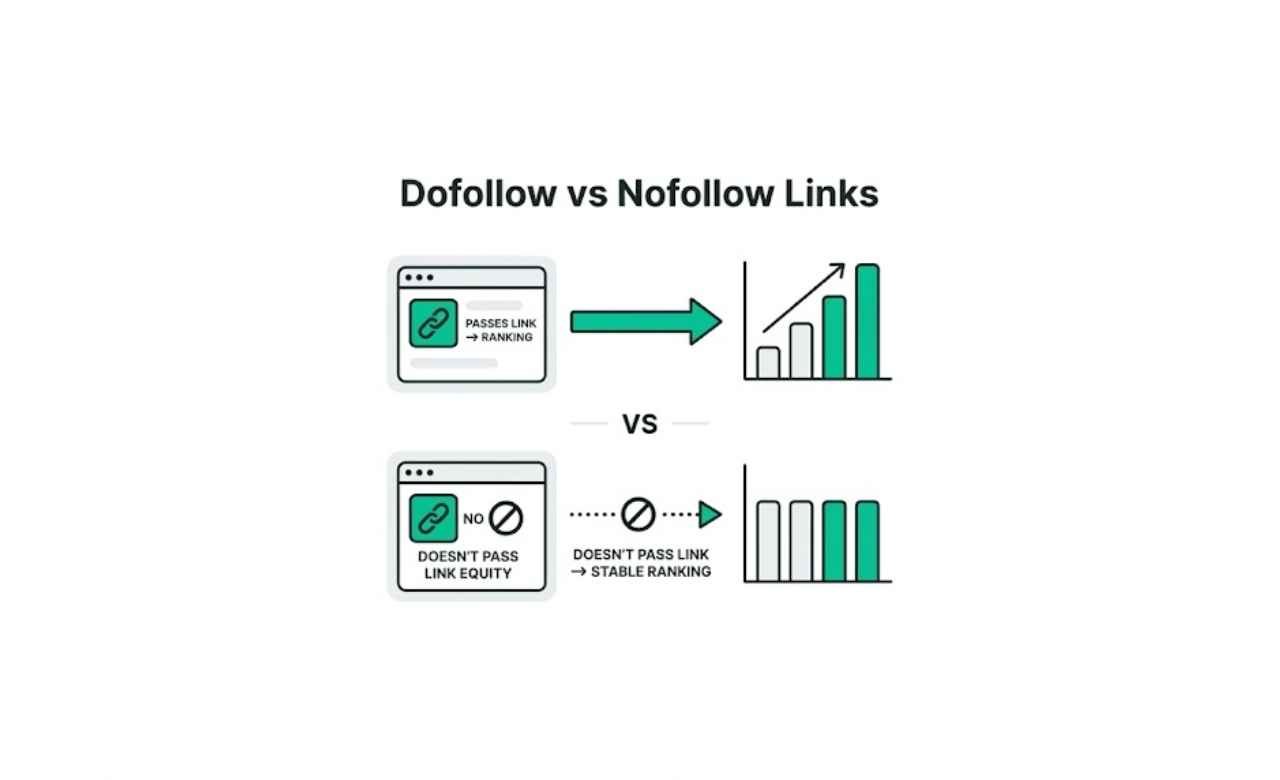
In technical search engine optimization, few topics generate as much debate, tactical confusion, and missed ranking opportunities as the distinction between dofollow vs nofollow links.
Search engines evaluate billions of documents daily. At the core of that discovery engine lies a fundamental architecture: hyperlinks. When Google was founded on the PageRank algorithm, hyperlinks were treated as peer-reviewed citations. The logic was clean and mathematical: if high-authority websites consistently point their Dofollow vs Nofollow Links users to your URL, your content is likely authoritative, accurate, and worthy of top placement in the search engine results pages (SERPs).
Decades later, link architecture has grown far more complex. The modern web must balance algorithmic link equity against link spam, commercial agreements, native advertising, and user-generated content across forums and social platforms. To organize this chaotic web, search engines rely heavily on link attributesnprimarily the directive known as rel="nofollow" alongside its modern semantic extensions.
Whether you run an enterprise content hub, manage client off-page campaigns, or audit technical architecture, understanding the mechanical and strategic difference between dofollow and nofollow links is essential. This guide breaks down both link types in deep technical detail, demonstrates how Googlebot interprets them, maps out how link equity actually flows, and explains how to architect a natural, bulletproof backlink profile that earns top organic rankings.
What Are Dofollow and Nofollow Links?
To understand how search engines crawl and evaluate the web, we must examine what happens when an HTML link connects two distinct documents.
A standard hyperlink relies on the HTML anchor tag (<a>). By default, every standard hyperlink published online is a “dofollow” link. There is no official HTML code written as rel="dofollow". Instead, if you write <a href="[https://example.com](https://example.com)">anchor text</a>, search engine crawlers like Googlebot recognize that hyperlink as an open conduit.
HTML
<!-- Standard, default link (Dofollow) -->
<a href="https://example.com">Visit Example Resource</a>

<!-- Modified link instructing crawlers to adjust behavior (Nofollow) -->
<a href="https://example.com" rel="nofollow">Visit Example Resource</a>
The Origins of the Nofollow Tag
In the early 2000s, search engines calculated organic rankings predominantly by tallying raw inbound links and anchor text matching. This created a widespread black-hat incentive structure: webmasters bombarded blog comment sections, message boards, guestbooks, and open directories with automated link spam to artificially inflate their domain authority and search engine rankings.
To combat this manipulation, Google’s then-head of webspam, Matt Cutts, joined forces with Jason Shellen of Blogger in 2005 to invent the rel="nofollow" attribute. The intent was simple: provide webmasters with a mechanism to say to Google: “I cannot vouch for the destination of this link. Crawl it if you like, but do not count this hyperlink as an endorsement, vote of confidence, or carrier of PageRank.”
Over the years, this attribute transformed how search engines understand the web graph. While a dofollow link functions as an active editorial endorsement that passes link equity (historically called link juice) from the referring domain to the target URL, a nofollow link acts as a guardrail, telling search engines that the publisher is either not endorsing the linked page, has been compensated for the link, or allows user-generated submissions on that page.
Link Anatomy and Attributes
A hyperlink is more than just a navigational bridge for human visitors; it is a rich data container for search engine crawlers. A complete link consists of:
- The Destination (
href): The target page receiving the visit. - The Anchor Text: The clickable text string providing contextual and semantic cues about the target page.
- The Rel Attribute (
rel="..."): Metadata instructing search engines on how to handle crawling, indexing, and the transference of authority.
Understanding the balance between dofollow and nofollow links forms the bedrock of both on-page architectural hygiene (outbound linking) and strategic off-page link building (inbound backlink acquisition).
What Is a Dofollow Link in SEO?
In search engine optimization, a dofollow link is any hyperlink that does not contain a restrictive rel attribute. When search engine crawlers process a dofollow backlink, they follow the URL path to the destination page, analyze the surrounding semantic content, and transfer a slice of the host domain’s accumulated authority to the receiving page.
Read more:Ecommerce Link Building: Proven Strategies to Earn Backlinks & Increase Rankings
The Mechanics of How Dofollow Links Work
To visualize how dofollow links operate, imagine PageRank as a reservoir of ranking power. When Site A earns authority through high-quality editorial content, trust metrics, and historic citations, it stores equity.
When Site A links to Site B using an unencumbered standard HTML link:
- Crawling Path: Googlebot traverses the link seamlessly, adding the target URL to its crawling queue.
- Contextual Signals: Google reads the surrounding text, the header hierarchy containing the link, and the precise anchor text used.
- Link Equity Transfer: A portion of Site A’s authoritative weight transfers to Site B, mathematically increasing Site B’s algorithmic trust and potential search engine rankings.
HTML Structure of a Dofollow Link
A clean, dofollow link requires nothing beyond the basic anchor tag:
HTML
<p>For more detailed technical data, review the
   <a href="https://moz.com/learn/seo/what-is-seo">comprehensive Moz guide to SEO</a>.
</p>
Notice the complete absence of a rel tag. While some CMS platforms or plugins occasionally write out rel="dofollow", search engines treat this as redundant markup. Google ignores rel="dofollow" because the base protocol is already permissive by default.
Why Dofollow Links Are Essential for SEO
Dofollow backlinks are the primary currency of organic visibility. Search engines were built on the premise that independent webmasters only link out to external resources when those resources offer genuine value, factual accuracy, or unique perspective.
When you consistently acquire high-quality dofollow backlinks from relevant, authoritative domains:
- Your overall website authority climbs.
- Your target pages can rank higher for competitive, high-intent keywords.
- Googlebot discovers, crawls, and indexes your deeper internal architecture much faster.
- Your root domain establishes historical trust, protecting your site during core algorithm updates.
What Is a Nofollow Link in SEO?
A nofollow link is an HTML hyperlink modified by the rel="nofollow" attribute. This micro-instruction tells search engine crawlers that the linking website does not endorse the target document, does not vouch for its editorial authenticity, and requests that search engines not pass PageRank through that specific link.
The Modern Syntax: Evolving Beyond Basic Nofollow
In September 2019, Google announced a massive evolution in how search engines process the rel="nofollow" attribute. Recognizing that the modern web had outgrown a blunt binary choice between “pure editorial link” and “untrusted link,” Google introduced two specialized, granular rel attributes:
rel="sponsored": Explicitly designed for links created through commercial transactions, including paid placements, sponsored articles, affiliate links, and advertorials.rel="ugc": Designed for “User-Generated Content,” applied to links originating from blog comment sections, community discussion boards, guestbook forms, and user profiles.
HTML
<!-- Traditional generic nofollow -->
<a href="https://example.com" rel="nofollow">Resource Link</a>

<!-- Explicit sponsored/paid link attribute -->
<a href="https://affiliate.example.com" rel="sponsored">Buy Product Now</a>

<!-- Explicit user-generated content link attribute -->
<a href="https://forum.example.com/thread-1" rel="ugc">Forum Contributor Post</a>

<!-- Multiple combined link attributes -->
<a href="https://partner.example.com" rel="nofollow sponsored">Partner Site</a>
The Fundamental Shift: Nofollow as a “Hint”
Before March 2020, Google treated the rel="nofollow" attribute as an absolute, ironclad directive. If an anchor tag contained rel="nofollow", Googlebot would drop that link from its PageRank calculation pipeline entirely. The link was dead on arrival for algorithmic equity.
However, in March 2020, Google officially updated its processing models: rel="nofollow", rel="sponsored", and rel="ugc" became treated as hints rather than hard directives.
What does this mean in practice? Google’s systems now analyze the nofollow tag within the wider semantic context of the web page. While Google will not typically pass full PageRank through a nofollow link, its algorithms reserve the right to crawl the linked page and use the link’s anchor text, topical alignment, and domain authority as contextual information when evaluating both sites.
Dofollow vs Nofollow Links: Key Differences
To grasp the tactical applications of both link types, review how dofollow and nofollow attributes compare across technical, operational, and algorithmic dimensions:
| Feature / Metric | Dofollow Links (Standard Link) | Nofollow Links (rel=”nofollow”, sponsored, ugc) |
| HTML Syntax | <a href="[https://example.com](https://example.com)">Anchor</a> | <a href="[https://example.com](https://example.com)" rel="nofollow">Anchor</a> |
| Primary Purpose | Editorial citation, endorsement, content validation | Commercial disclosure, spam mitigation, third-party user links |
| Link Equity Transfer | Passes full algorithmic PageRank / Link Equity | Typically blocks PageRank transfer; functions as an algorithmic hint |
| Crawler Traversal | Freely crawled and mapped across the web graph | Crawled selectively based on crawler heuristics and crawling budgets |
| Impact on Direct Rankings | Significant, primary off-page ranking factor | Indirect: Drives brand visibility, citations, and referral traffic |
| Google Algorithm Treatment | Processed as an organic vote of confidence | Processed as a hint for crawling, indexing, and contextual relevance |
| Common Use Cases | Editorial sources, trusted guides, natural citations | Paid ads, affiliate links, forum comments, press releases |
Beyond the code, the true distinction lies in intent. A dofollow link signals pure, uncompromised editorial freedom. A nofollow link signals commercial necessity, legal disclosure, or a platform architecture where anyone can publish a link without manual editorial review.
How Do Dofollow Links Affect SEO?
Dofollow links remain one of the most powerful and directly measurable variables in search engine optimization. When high-authority domains issue uninhibited dofollow links to your content, multiple ranking mechanisms activate.
1. The Amplification of Link Equity (PageRank)
PageRank is not a historical artifact; it remains active within Google’s core ranking systems. Every web page that earns backlinks accumulates a numeric score of algorithmic equity. When that page points an outbound dofollow link to your domain, a portion of that calculation recalculates across your target URL.
This accumulation improves your domain authority (a third-party proxy metric modeled by software like Moz, Ahrefs, and Semrush) and directly influences your site’s ability to rank for high-difficulty search terms.
2. Anchor Text Contextualization
Anchor text is the clickable phrasing that houses the link. When a dofollow link uses descriptive, contextually rich anchor text, it serves as an explicit semantic signal to Google:
HTML
<!-- Highly descriptive, relevant anchor text -->
<p>To master site speed, learn how to optimize <a href="https://yoursite.com/cls">Cumulative Layout Shift</a>.</p>
When Googlebot evaluates this dofollow link, it associates the destination page ([https://yoursite.com/cls](https://yoursite.com/cls)) directly with the concept of “Cumulative Layout Shift.” If hundreds of authoritative websites reference your page using natural variants of that anchor text via dofollow links, your organic rankings for that specific keyword cluster rise.
3. Accelerated Crawl Depth and Indexing Velocity
Google assigns a dynamic crawl budget to every domain on the internet, dictated primarily by that domain’s overall authority and update frequency. If you launch a new digital asset without inbound links, search engine crawlers might take weeks—or even months—to discover, evaluate, and index your content.
When an authoritative platform features your new asset in a dofollow link, search engine crawlers quickly follow that live path. This accelerates initial discovery, speeds up re-indexing after updates, and ensures your newest content enters the SERPs promptly.
4. Direct Impact on Organic Search Visibility
Search engine visibility correlates directly with backlink quality. Top search positions rarely go to pages with zero referring domains. Dofollow links from topically relevant websites signal that independent authorities find your content accurate and valuable. This algorithmic confirmation helps protect your content from ranking drops during major search updates.
How Do Nofollow Links Affect SEO?
Because nofollow links generally do not pass raw PageRank, many inexperienced SEOs incorrectly dismiss them as worthless. In reality, nofollow backlinks play an essential role in a sophisticated, modern search marketing strategy.
       [ Authority Site / Media Publication ]
                         │
              (rel="nofollow" Backlink)
                         │
                         ▼
        ┌───────────────────────────────────┐
        │       Multi-Channel Impact        │
        ├───────────────────────────────────┤
        │ 1. Direct Qualified Referral Traffic
        │ 2. Brand Recognition & Search Lift│
        │ 3. Secondary Editorial Backlinks  │
        │ 4. Algorithmic Entity Citations   │
        └───────────────────────────────────┘
1. Direct, High-Converting Referral Traffic
Rankings are ultimately a vehicle to generate real human engagement, qualified leads, and revenue. A dofollow link buried in the footer of an abandoned personal blog offers zero real-world value.
Conversely, a nofollow link featured in a Forbes, The New York Times, or Investopedia article can drive thousands of highly targeted visitors straight to your site. This referral traffic converts into paying customers, newsletter subscribers, and social shares, directly advancing your business goals regardless of PageRank.
2. The Multiplier Effect: Earning Downstream Dofollow Links
Nofollow links from major publications, authoritative trade magazines, and massive online communities serve as top-of-funnel content amplifiers.
Journalists, industry researchers, podcasters, and niche bloggers rely heavily on high-visibility media platforms to source facts, statistics, and industry references. When these creators discover your research through a nofollow link on a major media site, they will often cite your original research in their own independent articles, blogs, and resources—frequently via dofollow backlinks. In this way, a single nofollow link often triggers a downstream cascade of high-equity dofollow citations.
3. Entity Association and Brand Trust
Google’s search algorithms rely heavily on entity-based indexing via the Knowledge Graph. Google reads the web to understand real-world entities (people, corporations, products, concepts) and their relationships to one another.
When an authoritative domain discusses your brand and links to your website using rel="nofollow", Google still parses that association. The search engine reads your company name, identifies the co-occurring keywords, and reinforces your domain’s credibility as a recognized authority within that vertical.
4. Crawl Optimization and Hint Processing
Because Google treats nofollow links as hints, its algorithms still read the context of those links. If an authoritative site features a nofollow link pointing to your newly published case study, Google can use that hint to discover the document, analyze its topical relevance, and factor that contextual footprint into its broader evaluation of the web.
Dofollow vs Nofollow: Which Link Passes Link Equity?
The flow of link equity (colloquially called link juice) dictates how authority moves across the web. To visualize this, let’s run a controlled architectural experiment comparing two identical web pages with different outbound linking structures.
SCENARIO A: ALL DOFOLLOW LINKS
Page Authority Pool: 100%
Outbound Links: 4 Dofollow Links
Link 1: 25% Equity Passed ──► Target Site A
Link 2: 25% Equity Passed ──► Target Site B
Link 3: 25% Equity Passed ──► Target Site C
Link 4: 25% Equity Passed ──► Target Site D

SCENARIO B: MIXED DOFOLLOW & NOFOLLOW (POST-2009 ARCHITECTURE)
Page Authority Pool: 100%
Outbound Links: 2 Dofollow, 2 Nofollow
Link 1 (Dofollow): 25% Equity Passed ──► Target Site A
Link 2 (Dofollow): 25% Equity Passed ──► Target Site B
Link 3 (Nofollow): 25% Equity Wasted ──► [Evaporated / Blocked]
Link 4 (Nofollow): 25% Equity Wasted ──► [Evaporated / Blocked]
The Historical PageRank Sculpting Fallacy
Before 2009, some SEO practitioners attempted to “sculpt” PageRank by intentionally nofollowing internal links. They believed that if a page had 10 total links and 5 were tagged with rel="nofollow", the 100% equity pool would simply be divided across the remaining 5 dofollow links (giving each 20% instead of 10%).
In 2009, Google permanently dismantled this loophole. Under modern link equity calculations, link equity is divided by the total number of outbound links on the page, regardless of their attributes. If a page contains 10 outbound links and 5 of them feature the nofollow attribute, the 5 dofollow links still receive only 10% each. The equity allocated to the 5 nofollow links does not roll over to the dofollow links; it simply evaporates into the ether.
The Verdict on Equity Transfer
- Dofollow links pass link equity. They actively transmit authority, increase the target URL’s PageRank, and help drive organic rankings.
- Nofollow links do not pass direct link equity. They safeguard the linking site against penalties, disclose commercial and unvetted relationships, and protect the integrity of the broader link graph.
Understanding this division prevents you from wasting time attempting to manipulate PageRank flow on your own site, and helps you prioritize your external outreach campaigns effectively.
How to Identify Dofollow and Nofollow Links
Identifying whether a backlink is dofollow or nofollow does not require expensive enterprise software. You can examine the underlying HTML markup directly in your browser.
Inspecting HTML Code Manually via Developer Tools
Every major web browser (Google Chrome, Mozilla Firefox, Microsoft Edge, Apple Safari) includes built-in developer tools that reveal a page’s raw markup.
- Open any web page containing a link you want to check.
- Place your cursor directly over the link text.
- Right-click and select Inspect (or Inspect Element).
- The browser’s Elements window will open, highlighting the underlying HTML anchor tag.
HTML
<!-- Example 1: Dofollow Link Verification -->
<a href="https://example.com/guide">Complete Link Building Guide</a>
<!-- Result: No rel attribute exists. This is an active, standard DOFOLLOW link. -->

<!-- Example 2: Nofollow Link Verification -->
<a href="https://example.com/guide" rel="nofollow">Complete Link Building Guide</a>
<!-- Result: rel="nofollow" is present. This is a NOFOLLOW link. -->

<!-- Example 3: Modern Sponsored Link Verification -->
<a href="https://example.com/buy" rel="sponsored noopener">Purchase Software</a>
<!-- Result: rel="sponsored" is present. This is treated as a commercial NOFOLLOW link. -->
Reading Page Source Code
If you prefer not to use the interactive inspector:
- Right-click on a blank area of the page and select View Page Source (or press
Ctrl + Uon Windows,Cmd + Option + Uon Mac). - Press
Ctrl + F(Cmd + Fon Mac) to open the search bar. - Search for the domain name or anchor text in question.
- Review the opening
<a>tag to see if it containsrel="nofollow",rel="sponsored", orrel="ugc".
How to Check if a Backlink Is Dofollow or Nofollow
While manual inspection works well for individual links, digital marketers managing hundreds or thousands of URLs need dedicated, automated tools to audit backlinks at scale.
1. Browser Extensions for Fast Visual Audits
Free browser extensions can scan pages in real time and automatically highlight nofollow links, saving you from having to inspect the HTML manually.
- Strike Out Nofollow: Automatically draws a red strike-through line over any link containing
rel="nofollow",rel="sponsored", orrel="ugc". - NoFollow (Chrome/Firefox): Renders an outline box (typically red or dotted) around all nofollow links on any page you visit.
- Detailed SEO Extension: Provides a comprehensive on-page dashboard that calculates the total number of outbound links, their internal vs. external split, and the ratio of dofollow vs. nofollow links on the page.
2. Dedicated Backlink Audit Platforms
To analyze an entire domain’s backlink profile, professional SEO teams rely on dedicated crawlers and index databases:
[Target Domain] ──► [SEO Crawler: Ahrefs / Moz / Semrush]
                              │
       ┌──────────────────────┴──────────────────────┐
       ▼                                             ▼
[Dofollow Link Inventory]                 [Nofollow Link Inventory]
- Contextual Editorial Links               - Press Releases
- High Equity Citations                   - Forum / UGC Links
- Critical Ranking Drivers                 - Affiliate / Sponsored Links
- Ahrefs Site Explorer: Navigate to the Backlinks or Referring Domains report and use the dedicated filter bar to toggle between Dofollow and Nofollow. This immediately isolates your high-equity links from non-equity citations.
- Semrush Backlink Analytics: The Overview dashboard breaks down your link profile into percentages of Dofollow, Nofollow, Sponsored, and UGC links, letting you track your link distribution at a glance.
- Screaming Frog SEO Spider: For site audits, Screaming Frog can crawl your entire domain and flag internal and external outbound links using the Outlinks and External tabs. Filter by the “Follow” column (True/False) to quickly identify missing or misconfigured link attributes across thousands of pages.
When Should You Use Dofollow Links?
Knowing when to deploy uninhibited dofollow links across your own web architecture is essential for sound editorial hygiene and crawler optimization. A natural, healthy website naturally links out to external resources.
Scenario A: Citing Trusted, High-Quality References
When your content references an academic study, government dataset, authoritative whitepaper, or industry benchmark, you should generally use a standard dofollow link. Citing high-quality, reputable resources signals to search engines that your content is well-researched and grounded in verified facts.
HTML
<!-- Proper editorial citation: Dofollow -->
<p>According to research published by the
   <a href="https://www.cdc.gov/sleep/about/">Centers for Disease Control and Prevention</a>,
   adults need at least 7 hours of sleep per night.
</p>
Scenario B: Contextual Credit and Sourcing
If another creator, journalist, or blogger broke a news story, created an original graphic, or conducted an exclusive interview that you are discussing, standard editorial ethics call for a dofollow link back to the primary source. Withholding credit via an unnecessary nofollow tag on a genuine citation provides no algorithmic advantage and can hurt your reputation with industry peers.
Scenario C: Internal Architecture and Navigation
Your site’s internal links should almost always remain dofollow. Your header navigation, footer links, contextual in-content citations, and related-article widgets need to allow link equity to circulate freely throughout your domain:
HTML
<!-- Healthy internal linking: Always Dofollow -->
<p>To dive deeper into technical site speed, read our guide on
   <a href="/core-web-vitals-guide">Core Web Vitals Optimization</a>.
</p>
Nofollowing your own internal links creates crawl dead-ends, prevents search engine crawlers from exploring deeper sub-directories, and wastes your domain’s accumulated PageRank.
When Should You Use Nofollow Links?
Failing to implement nofollow attributes where required by search engine guidelines can expose your website to severe algorithmic penalties and manual webspam actions.
1. Paid Placements, Advertorials, and Sponsored Links
Google’s Search Essentials (formerly Webmaster Guidelines) explicitly state that any link that involves monetary compensation, free products, services, or commercial incentives must be marked with a non-ranking attribute.
Failing to label commercial links can trigger an algorithmic or manual penalty against both the site hosting the link and the site receiving it.
HTML
<!-- Best Practice for Modern Sponsored Links -->
<a href="https://softwarepartner.com/discount" rel="sponsored">Get 20% Off Software</a>

<!-- Acceptable Traditional Alternative -->
<a href="https://softwarepartner.com/discount" rel="nofollow">Get 20% Off Software</a>
2. Affiliate Marketing Links
If you monetize your website using affiliate programs (Amazon Associates, ShareASale, CJ Affiliate, or individual SaaS partner programs), every single outbound tracking link must be modified using rel="sponsored" or rel="nofollow". Leaving affiliate links as dofollow violates Google’s commercial link policies and can lead to ranking drops.
3. User-Generated Content (UGC) and Comments
If you manage an open community forum, accept public blog comments, or allow user-submitted profile bios, your platform will inevitably attract link spam. To prevent your domain from being used as a link-building farm, configure your publishing software to automatically apply rel="ugc" or rel="nofollow" to all user-submitted URLs:
HTML
<!-- Automatically tagged user link in comment section -->
<p>Great post! Check out my site:
   <a href="https://spamsite.example.com" rel="ugc nofollow">Free Downloads</a>
</p>
4. Directing to Low-Trust or Unvetted Resources
If you are writing about a security vulnerability, an online scam, or a controversial topic and need to link to an untrusted site as an example, use rel="nofollow". This allows your human readers to view the source without passing your site’s authority to a malicious or low-quality destination.
Do Nofollow Links Help With SEO and Rankings?
The short answer is yes, but through indirect, systemic, and multi-channel mechanisms rather than through direct PageRank transfer.
1. The Natural Backlink Profile Architecture
Every organically grown website on the internet accumulates a mix of both dofollow and nofollow links over time. When real users share content across social channels, discussion forums (Reddit, Quora), news aggregators, and reference platforms (Wikipedia), those links are almost exclusively nofollow.
HYPOTHETICAL UNNATURAL PROFILE (High Risk of Algorithmic Penalty)
Dofollow Backlinks: 99.5%
Nofollow Backlinks: 0.5%
Result: Algorithmic Red Flag ──► Unnatural Link Warning / Manual Action

NATURAL, HEALTHY BACKLINK PROFILE (Typical Authority Distribution)
Dofollow Backlinks: 65% - 80%
Nofollow Backlinks: 20% - 35%
Result: Healthy Algorithmic Footprint ──► Stable, Compounding Organic Growth
If a website has thousands of inbound links and 100% of them are dofollow links with exact-match anchor text, Google’s automated spam detection systems (including Penguin-derived algorithms) will easily identify that pattern as artificial link manipulation. A healthy proportion of nofollow backlinks helps confirm that your site’s visibility is growing organically.
2. Wikipedia and Niche Directories: Entity Verification
All external links placed on Wikipedia are automatically modified with the rel="nofollow" attribute. Despite passing zero PageRank, securing a citation on a relevant Wikipedia entry remains a high-value win for SEO.
Why? Because Googlebot constantly crawls Wikipedia to verify entities, relationships, and source material for its Knowledge Graph. A citation on an authoritative reference page validates your website as a legitimate authority within your market, strengthening your topical relevance across the board.
3. Generating High-Value Traffic Signals
When hundreds of users click through a nofollow link from a trusted, high-traffic website to visit your resource, they spend time reading your content, navigating to other pages on your site, and sharing it with their networks. These positive user interactions generate brand momentum that often leads to organic citations, social shares, and direct searches down the road.
Dofollow vs Nofollow Links for Link Building
When organizing your off-page SEO strategy, should you focus entirely on acquiring dofollow links, or does nofollow link building offer legitimate value? An effective, modern link-building program balances both.
                         LINK BUILDING FUNNEL

       [ High-Volume Awareness & Brand Placement ]
           (Media PR, Newsletters, Reddit, Quora)
                            │
                            ▼
              Mostly Nofollow / UGC Links
             (Builds Audience, Entity Trust,
               and Direct Referral Traffic)
                            │
                            ▼
       [ Downstream Discovery by Content Creators ]
         (Bloggers, Journalists, Industry Leads)
                            │
                            ▼
        [ Targeted High-Equity Editorial Links ]
         (Guest Articles, Primary Research Citations)
                            │
                            ▼
                100% Pure Dofollow Links
           (Passes Link Equity & PageRank,
             Drives Top Search Engine Rankings)
The Primary Objective: Earning Editorial Dofollow Backlinks
Your primary focus for direct keyword movement should always be acquiring high-quality, contextual dofollow backlinks. The most effective, sustainable methods to earn these links include:
- Original Research, Industry Statistics, and Case Studies: Publishing proprietary data creates an organic “link magnet.” Writers and journalists searching for statistics to support their claims will naturally discover your data and link back to your original source using dofollow citations.
- Digital PR and Targeted Media Outreach: Pitches built on unique insights, expert commentary, or survey results help secure coverage in authoritative digital newspapers and trade publications.
- The Skyscraper Technique and Broken Link Building: Identifying broken links on high-authority pages and offering your updated, high-value resource as an immediate replacement remains a reliable way to win contextual dofollow placements.
- Guest Contributions on High-Trust Industry Sites: Writing comprehensive, non-promotional articles for respected trade publications earns contextual, in-body dofollow links that build real topical authority.
The True Role of Nofollow Backlinks in Link Building
While dofollow links build equity, nofollow backlinks provide the distribution that makes those links possible.
If your link building relies entirely on manual outreach for dofollow guest posts, your profile will end up looking synthetic. Participating in authoritative forum discussions, sharing case studies with Reddit communities, launching PR campaigns that earn syndicated coverage, and distributing uninhibited content all generate nofollow links.
These nofollow placements expand your audience, establish social proof, and drive the visibility that leads other creators to cite your content with dofollow links naturally.
Common Mistakes to Avoid With Dofollow and Nofollow Links
Small misconfigurations in link architecture can easily undermine your rankings, compromise your crawl budget, or even trigger Google webspam penalties. Here are the most critical mistakes to watch for.
1. Nofollowing Internal Site Navigation
Some webmasters still use rel="nofollow" on their own internal links—such as links to their terms of service, privacy policy, login pages, or sub-category archives—hoping to save crawl budget or conserve PageRank.
Never nofollow internal links. Doing so creates crawl dead-ends for Googlebot, prevents link equity from reaching deeper pages, and traps authority in your root directories. If you want to keep utility pages out of the search index, use a <meta name="robots" content="noindex, follow"> tag on the page itself rather than nofollowing the links that point to it.
HTML
<!-- CATASTROPHIC ERROR: Traps Link Equity & Kills Crawl Depth -->
<a href="/login" rel="nofollow">Client Login</a>
<a href="/category/technical-seo" rel="nofollow">Technical SEO Category</a>

<!-- CORRECT IMPLEMENTATION: Allow Free Traversal -->
<a href="/login">Client Login</a>
<a href="/category/technical-seo">Technical SEO Category</a>
2. Failing to Mark Sponsored and Affiliate Links
Leaving affiliate links, paid product reviews, or advertorial placements as dofollow links is one of the most common triggers for Google manual actions. If an algorithm update or human reviewer detects an un-attributed commercial link relationship, Google can penalize your domain, stripping your site of its search visibility until you submit a formal reconsideration request.
Always ensure your CMS, affiliate management plugins, and e-commerce platforms automatically apply rel="sponsored" or rel="nofollow" to any commercial links.
3. Buying Dofollow Links via Private Blog Networks (PBNs)
Purchasing cheap dofollow links from private blog networks, low-quality guest post marketplaces, or automated link packages remains a fast track to algorithmic penalties.
Google’s SpamBrain detection algorithms easily recognize the footprint of low-rent link networks: mismatched content themes, identical hosting IPs, artificial anchor text ratios, and pages linking out to unrelated commercial sites.
A single high-relevance dofollow backlink from an authoritative, trusted industry publication will do more for your rankings than hundreds of low-tier, manipulated PBN links—without placing your domain at risk.
4. Over-Optimizing Inbound Dofollow Anchor Text
While dofollow links pass authority through anchor text, over-using exact-match, commercial keywords across all your inbound links can look highly artificial.
UNNATURAL, HIGH-RISK ANCHOR PROFILE (Approaching Algorithmic Penalty)
- "best car accident lawyer": 60%
- "hire accident attorney": 30%
- "injury lawyer": 8%
- "brand name / URL": 2%

NATURAL, HEALTHY ANCHOR PROFILE (Safe, Compounding Authority)
- "Brand Name / Company Name": 45%
- "Website URL (https://site.com)": 25%
- "Topical / Partial Match Phrases": 20%
- "Generic anchors (learn more, source, website)": 10%
A natural backlink profile consists predominantly of branded terms, plain URLs, and diverse partial-match phrases. Use your dofollow links to build authority naturally, rather than stuffing them with commercial keywords.
Dofollow vs Nofollow Links: Which Should You Focus On?
Choosing between dofollow and nofollow links is not an either-or proposition. To build sustainable organic traffic and protect your search visibility, your SEO strategy needs to leverage both link types for what they do best.
       ┌────────────────────────────────────────────────────────┐
       │    THE BALANCED SEO LINK & ACQUISITION ECOSYSTEM      │
       └────────────────────────────────────────────────────────┘
                                    │
           ┌────────────────────────┴────────────────────────┐
           ▼                                                 ▼
┌──────────────────────────────┐          ┌──────────────────────────────┐
│  DOFOLLOW PRIORITY: EQUITY   │          │  NOFOLLOW PRIORITY: TRAFFIC  │
├──────────────────────────────┤          ├──────────────────────────────┤
│ • Contextual Guest Features  │          │ • Major Media PR Mentions    │
│ • Primary Resource Citations │          │ • Reddit / Forum Communities │
│ • Data Studies & Infographics│          │ • Podcast & Video Show Notes │
│ • Business Directories       │          │ • Social Media Aggregators   │
├──────────────────────────────┤          ├──────────────────────────────┤
│ Direct Ranking Impact: HIGH  │          │ Direct Ranking Impact: LOW   │
│ Direct Traffic Impact: LOW   │          │ Direct Traffic Impact: HIGH  │
│ Primary Value: Algorithmic   │          │ Primary Value: Audience &    │
│ PageRank & Link Equity       │          │ Natural Profile Diversity    │
└──────────────────────────────┘          └──────────────────────────────┘
The Balanced Approach to Modern SEO
- Focus on Dofollow Links to Move the Needle on Rankings: Direct your active outreach, digital PR, and content marketing toward acquiring high-authority dofollow backlinks. These links supply the link equity, authority signals, and PageRank your site needs to compete for difficult search terms.
- Use Nofollow Links for Traffic, Audience Growth, and Profile Health: Treat nofollow, sponsored, and UGC links as natural outcomes of effective content marketing. Leverage them to drive referral traffic, build brand recognition, reach new audiences, and protect your backlink profile from algorithmic red flags.
- Keep Your Outbound Linking Clean and Honest: On your own website, maintain clear boundaries. Link out freely to high-quality reference material with dofollow links, keep all your internal navigation open to crawlers, and always apply
rel="sponsored"orrel="nofollow"to commercial relationships, affiliate promotions, and user-generated comments.
FAQS
How to tell if a link is dofollow or nofollow?
You can inspect the link’s HTML and look for rel="nofollow", rel="sponsored", or rel="ugc". If these attributes aren’t present, the link is generally treated as a regular followable link.
Are nofollow links good for SEO?
Yes, nofollow links can still be useful for referral traffic, visibility, and a natural backlink profile. They simply signal that the linking site doesn’t want to pass the same link-related signals as a normal link.
What does “dofollow” mean?
“Dofollow” is the common SEO term for a regular link without a nofollow directive. Such links can be crawled by search engines and may contribute to the linking relationship between websites.
Which websites have dofollow backlinks?
Any website can potentially provide a followable backlink if its links don’t include a qualifying rel attribute. Whether a specific site provides dofollow links depends on its linking policies and the type of page or link.
Conclusion
Understanding dofollow vs nofollow links is important for building a balanced SEO backlink strategy. Dofollow links can contribute to link equity and search visibility, while nofollow links can still bring referral traffic, exposure, and valuable connections. Instead of focusing on only one type, aim for a natural backlink profile with relevant, high-quality links from trustworthy websites